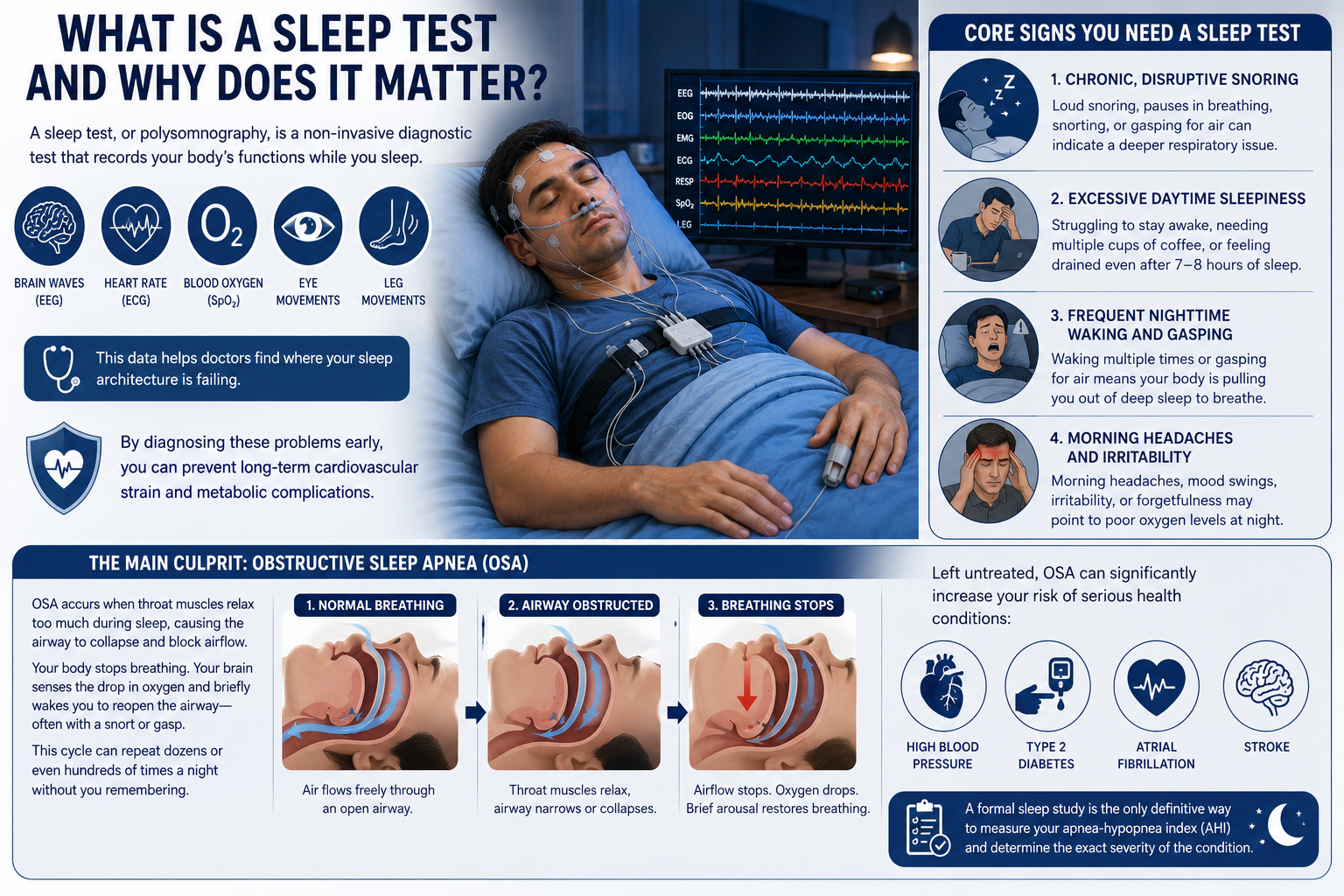
A sleep test, or polysomnography, is simply a non-invasive diagnostic test that records your body’s functions while you sleep. It measures brain waves, heart rate, blood oxygen, eye and leg movements. This data will help doctors find where your sleep architecture is failing.
For many, the journey begins with the realization that their sleep is not restorative. If you’re constantly dragging your feet through the afternoon, you have regular brain fog, or you wake up feeling like you can’t breathe, these are not things you should just live with. By diagnosing these problems early, you can prevent long-term cardiovascular strain and metabolic complications.
Core Signs You Need a Sleep Test
Your body gives off signals if there is something wrong with your sleeping cycle. Knowing how to recognise the signs will allow you to identify that you need a sleep study done on you as soon as possible and avoid months of feeling constantly tired.
1. Chronic, Disruptive Snoring
While snoring is often treated as a harmless, slightly annoying habit, it is frequently a sign of a partially blocked airway. If your snoring is loud enough to wake others or is accompanied by sudden pauses in breathing, snorting, or gasping for air, it moves from a minor nuisance to a primary indicator of a deeper respiratory issue.
2. Excessive Daytime Sleepiness
Everyone feels tired occasionally, but excessive daytime sleepiness is a different beast entirely. This is the kind of heavy, unyielding exhaustion where you struggle to stay awake during routine meetings, find yourself nodding off at red lights, or need multiple cups of coffee just to sustain basic concentration. If you sleep for seven to eight hours but still feel completely drained by midday, your sleep quality is likely compromised.
3. Frequent Nighttime Waking and Gasping
Waking up multiple times throughout the night to use the restroom, or suddenly waking with a choking or gasping sensation, means your brain is actively pulling you out of deep sleep to force you to breathe. This shatters your sleep cycles, preventing you from reaching the deep, restorative phases of REM and slow-wave sleep.
4. Morning Headaches and Irritability
When your breathing stops periodically during the night, your blood oxygen levels drop, and carbon dioxide builds up. This often manifests as a dull, throbbing headache right when you wake up. Coupled with chronic irritability, mood swings, or sudden forgetfulness, it points directly toward poor nocturnal oxygenation.
The Main Culprit: Obstructive Sleep Apnea
When assessing whether you need a clinical intervention, medical professionals frequently look for signs of obstructive sleep apnea (OSA). This condition occurs when the muscles in the back of your throat relax too much during sleep, allowing the soft tissues to collapse and temporarily block your airway.
During an episode of OSA, your body temporarily stops breathing. Your brain notices the oxygen drop and sends a quick panic signal to wake you up just enough to reopen the airway—often with a loud snort or gasp. This cycle can repeat dozens or even hundreds of times a night without you fully remembering it the next morning.
Left untreated, the constant oxygen drops and systemic stress caused by OSA can dramatically increase your risk of high blood pressure, type 2 diabetes, atrial fibrillation, and stroke. A formal sleep study is the only definitive way to measure your apnea-hypopnea index (AHI) and determine the exact severity of the condition.
Managing Sleep Health in Dubai
Environment and lifestyle components make a huge impact on our respiratory system functioning. For example, those who wish to be attentive about their sleep apnea symptoms Dubai may have to consider specific features of their environment.
The dependence of the local environment on air-conditioned living space can lead to drying of nasal passages and worsening of the condition of inherent snoring and/or congestion. In addition, the stressful work environment in the city can mask sleep disorders and make people believe that their fatigue comes from being tired of work only.
In case if you reside in a hectic urban environment and see that the quality of your life suffers because of poor sleeping, symptom monitoring and professional local help become extremely important.
When to See a Sleep Doctor or Sleep Specialist
Identifying when it is necessary to visit a sleep doctor depends on the regularity and seriousness of the symptoms. In case of having trouble with loud snoring, disturbed sleep, and uncontrollable fatigue for a couple of weeks, there should be no need to guess any further.
An experienced sleep doctor or pulmonologist would examine the whole state of your health. He will examine your airways and make conclusions about the necessity of conducting an in-lab sleep study or taking a home test for sleep apnea.