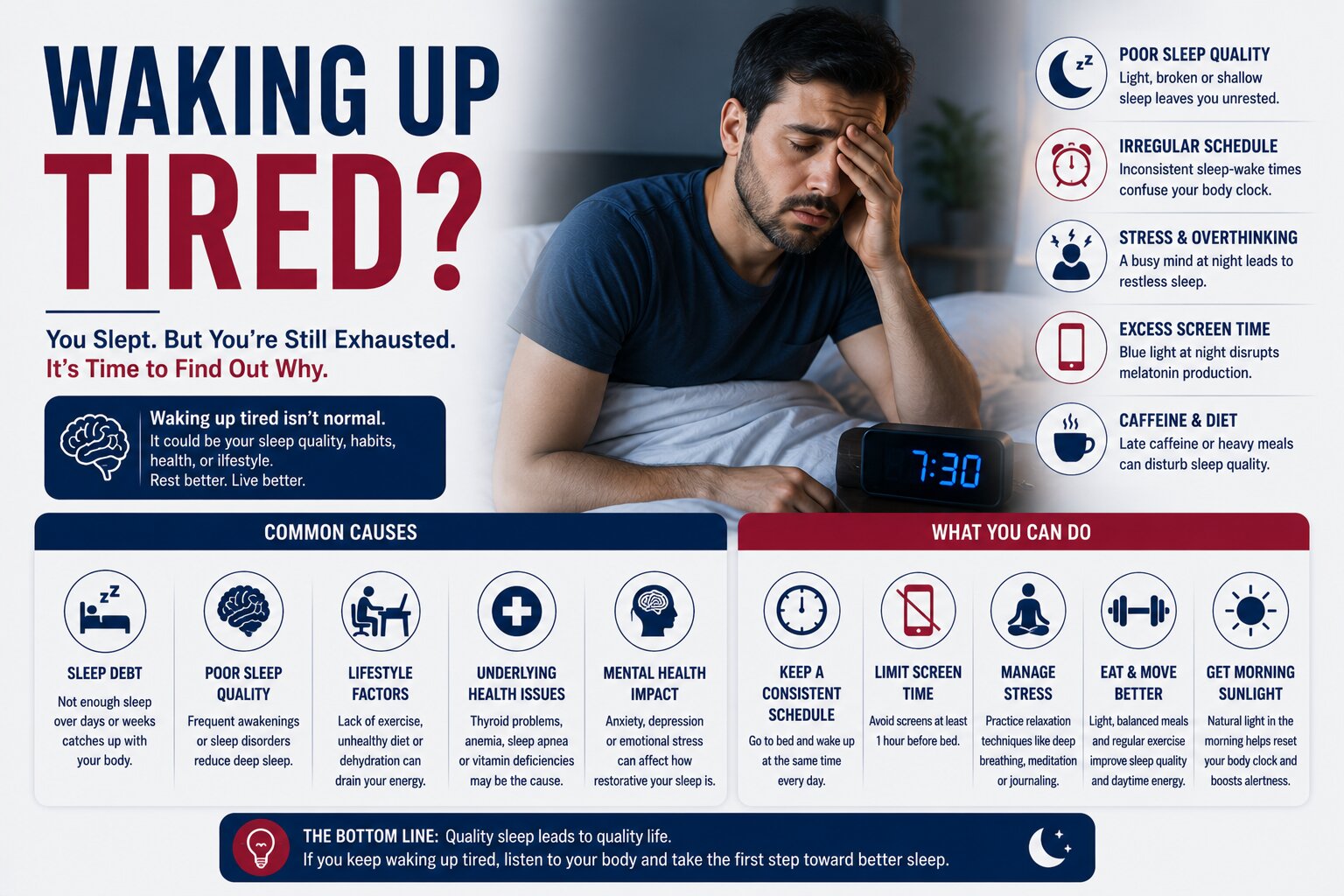
The most common cause is sleep fragmentation. This means sleep is being broken repeatedly, often without the person knowing. Each interruption stops the body from completing the deeper, restorative stages it needs. You can spend eight hours in bed and still feel like you barely slept.
Obstructive sleep apnea is one of the most frequent reasons this happens. The airway closes during sleep, oxygen drops briefly, and the brain rouses the body just enough to restart breathing. This can happen dozens of times in a single night. The person rarely remembers any of it. But the damage to sleep quality is real, and waking up tired is one of the most consistent signs.
Other causes include insomnia, certain medications, and medical conditions such as an underactive thyroid or low iron. In some patients, anxiety or low mood is contributing in ways they haven't fully recognised yet.
Sleep Quality vs Sleep Quantity: Why the Difference Matters
Eight hours of broken sleep is not the same as eight hours of consolidated, restorative sleep.
During healthy sleep, the body moves through cycles that include light sleep, deep slow-wave sleep, and REM sleep. Deep sleep is when physical repair happens. REM sleep is important for memory and emotional processing. When sleep is fragmented, these cycles can't be completed properly. The result is sleep that looks adequate on paper but leaves you exhausted in practice.
Many patients arrive convinced they sleep fine because they fall asleep easily and stay in bed long enough. What they haven't considered is what's happening during those hours.
What Is Sleep Inertia, and When Is It a Problem?
Sleep inertia is the brief grogginess most people feel in the first few minutes after waking. It's a normal transition as the brain moves from sleep to full alertness. For most people, it clears within fifteen to thirty minutes.
When that grogginess doesn't clear, when you feel foggy or heavy for hours after waking, that's not normal. That's a sign the sleep itself wasn't restorative.
Patients with sleep apnea often describe this exactly. They wake feeling as if they haven't slept at all. Some say they feel worse in the morning than they did before going to bed.
Morning Headaches and Why They Matter
Morning headaches are a symptom that often comes alongside waking tired, and many patients don't connect the two.
In sleep apnea, drops in oxygen during the night cause blood vessels in the brain to widen. This can produce a headache that's present on waking and typically eases within an hour or two of getting up. If this pattern sounds familiar, it's worth raising with your doctor.
Not every morning headache points to sleep apnea. Tension, dehydration, and disrupted sleep from other causes can all produce them. But a morning headache that comes alongside fatigue, unrefreshing sleep, and snoring is a combination that deserves proper investigation.
When to Consider Sleep Apnea
Sleep apnea doesn't always come with obvious snoring. What's more consistent is the daytime picture.
Waking up tired despite enough hours in bed. Feeling heavy and unrefreshed from the moment you open your eyes. Struggling to concentrate in the morning. Needing coffee just to get started. Feeling that no amount of sleep fixes the fatigue.
If these sound familiar, and particularly if a partner has noticed snoring or breathing pauses during the night, sleep apnea should be on the list of possibilities. A sleep study can identify whether this is what's happening.
A home sleep test is often the right first step. It's done in the patient's own environment, no overnight clinic stay required. It gives a clear picture of oxygen levels and breathing patterns through the night. Where the presentation is more complex, an in-laboratory study provides more detailed monitoring of sleep stages and other data.
Medical Causes Worth Checking
Not every case of morning tiredness points to a sleep disorder. Some straightforward medical causes are easy to miss and easy to treat once found.
Thyroid Function
An underactive thyroid affects energy regulation throughout the body. Fatigue and sluggishness in the morning are common symptoms. A simple blood test measuring TSH levels can identify this quickly.
Iron and Ferritin Levels
Low iron, even without full anaemia, can cause persistent tiredness and difficulty feeling rested. A ferritin level checks iron stores directly and is worth including when fatigue is the main complaint.
Vitamin D
Vitamin D deficiency is increasingly recognised as a contributor to fatigue and low mood. This is particularly relevant in Dubai, where indoor lifestyles and sun avoidance are common despite high ambient sunlight. A blood test picks this up easily.
These are not replacements for a sleep assessment. They can coexist with sleep disorders, and finding one doesn't rule out the other. But basic blood work is a sensible starting point alongside or before a sleep evaluation.
Lifestyle Factors That Make Morning Tiredness Worse
A few patterns consistently make waking up tired more likely.
Alcohol before bed is one of the most common. It helps people fall asleep but disrupts deep and REM sleep in the second half of the night. The result is a night that looks normal but leaves you flat in the morning.
Irregular sleep timing is another. The body runs on an internal clock that prepares it for sleep and for waking at predictable times. When those times shift significantly from day to day, mornings feel harder. Screens close to bedtime, caffeine late in the day, and high-stress evening activity all make deep sleep less likely.
Addressing these factors is always worth trying. But if improving them doesn't resolve the problem, something more is usually involved.
Key Takeaways
- Waking up tired despite adequate hours is usually a quality problem, not a quantity problem.
- Sleep fragmentation from sleep apnea is one of the most common and most missed causes.
- Sleep inertia that lasts beyond thirty minutes, or severe morning grogginess, is a warning sign.
- Morning headaches alongside fatigue and unrefreshing sleep are a combination worth investigating.
- Thyroid function, iron stores, and vitamin D are medical causes worth checking with blood tests.
- A sleep study is the definitive way to assess what's happening during sleep.