Getting enough solid sleep keeps you healthy, but a lot of people still wake up exhausted. Many don’t realise their breathing at night might be the problem. Snoring, while common and annoying, isn’t always harmless. So, when should you worry? It’s important to know the difference between snoring vs sleep apnea. Taking the time to spot the difference could protect you in the long run. This guide breaks it down and explains when you should visit a pulmonologist for help.
What Does Snoring Mean? A Closer Look at the Noise
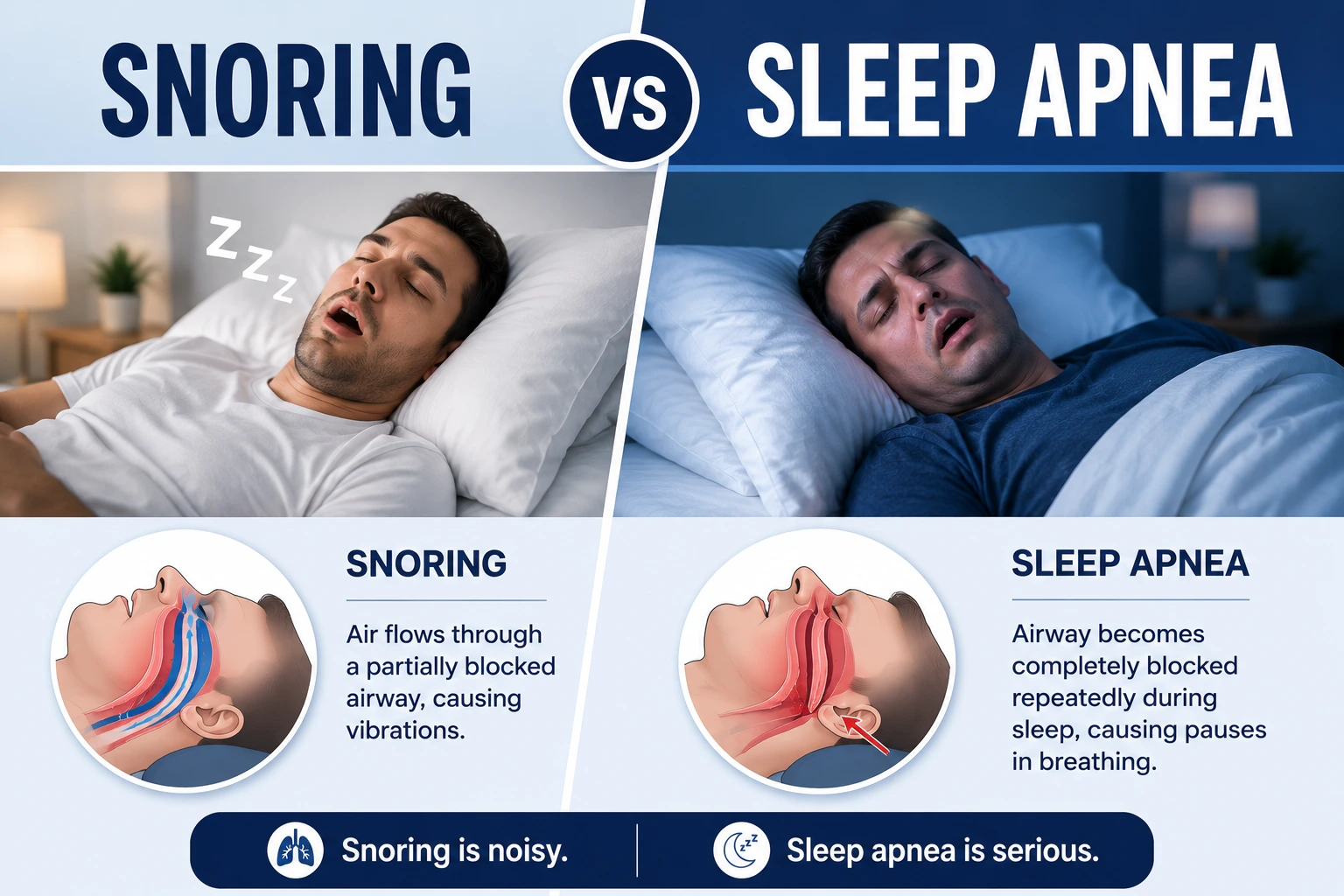
Snoring happens when the flow of air in your throat makes relaxed tissues vibrate, creating a rough or raspy noise as you breathe. This issue affects many adults and is very common. Almost everyone snores now and then, but for certain people, it turns into an ongoing struggle.
Loud Snoring Causes
Blocked airways are the main reason people snore. Some typical loud snoring causes are listed below:
- Nasal Issues: Ongoing nasal blockage or a crooked septum can draw air into the throat in a way that causes snoring.
- Weak Muscles: Muscles in the throat or tongue that become too loose might block airflow. Alcohol and sleeping pills can make this worse by relaxing muscles further.
- Thick Throat Tissue: Extra weight often leads to more tissue in the throat, which can make the airway smaller.
- Large Palate or Uvula: If your soft palate or uvula is long, it can restrict the nasal-to-throat airflow and vibrate like a flap.
Snoring might annoy a sleeping partner, but it's not a big health risk for the person snoring. Sometimes, though, it signals something more dangerous: sleep apnea.
What is Sleep Apnea? A Serious Breathing Problem
Sleep apnea is a sleep problem where breathing starts and stops during sleep. The most usual type, Obstructive Sleep Apnea (OSA), happens when throat muscles relax and block the airway. This isn't just loud snoring. It's a snoring breathing problem that cuts off oxygen to the brain and body.
The main difference lies in the effects. Every time your breathing pauses, your brain forces you to wake up from sleep, even if it’s so quick you don’t notice, to get air flowing again. This disrupts sleep, causing extreme tiredness during the day and putting a huge strain on your heart and blood vessels.
Sleep Apnea vs. Snoring: The 4 Big Differences
You can snore without having sleep apnea, but it’s rare to have obstructive sleep apnea without snoring. These are the key differences to help you grasp the sleep apnea snoring difference:
- Breathing Pattern: Snoring is Steady, though loud and vibrating. Sleep apnea is interrupted. Breathing stops for 10 seconds or more, often many times per hour.
- Sound: Snoring is a Consistent, rhythmic sound. Sleep apnea is often loud snoring followed by a period of silence, then a choking, gasping, or snorting sound as breathing resumes.
- Daytime Symptoms: No daytime snoring symptoms. Sleep apnea consists of excessive daytime sleepiness, morning headaches, difficulty concentrating, and irritability.
- Health Impact: Snoring is not a severe health issue. Sleep apnea can cause a high risk for high blood pressure, heart disease, stroke, and type 2 diabetes.
Seeking Expert Help and Treatment
Figuring out if you just snore or have sleep apnea needs a proper check-up by a professional. Dr Syed, a pulmonologist with over three decades of experience at places like Royal Brompton Hospital in London, focuses on understanding and treating sleep-related breathing problems. He aims to find out what’s causing your symptoms and offer the right treatment to boost your sleep and health.
If experts think your snoring issue might be tied to sleep apnea, they might suggest a sleep study. This study, which can happen at home or in a sleep lab, tracks how you breathe, your oxygen levels, and your heart rate while you sleep at night.
Treatment methods depend on how severe the problem is and what causes it. They might include making changes to your lifestyle using CPAP therapy to help keep your airways open, or trying oral devices.
Conclusion
Knowing the difference between snoring vs sleep apnea is important for your well-being. Sometimes snoring is harmless, but symptoms like gasping, choking, or daytime fatigue could point to sleep apnea, a serious condition that needs medical attention. Ignoring it might lead to more serious health problems over time. Contact Dr Syed for a consultation.