H1: Snoring Causes and Treatment: What's Behind the Sound and What You Can Do About It
INTRODUCTION
Snoring happens when airflow through the nose and throat is partially blocked during sleep, causing surrounding tissues to vibrate. It's common. But common doesn't always mean harmless. For some people it's a minor annoyance. For others, it's a sign that breathing during sleep is being seriously disrupted.
The difference between the two matters. And it's worth understanding before reaching for an off-the-shelf remedy.
Why Snoring Happens
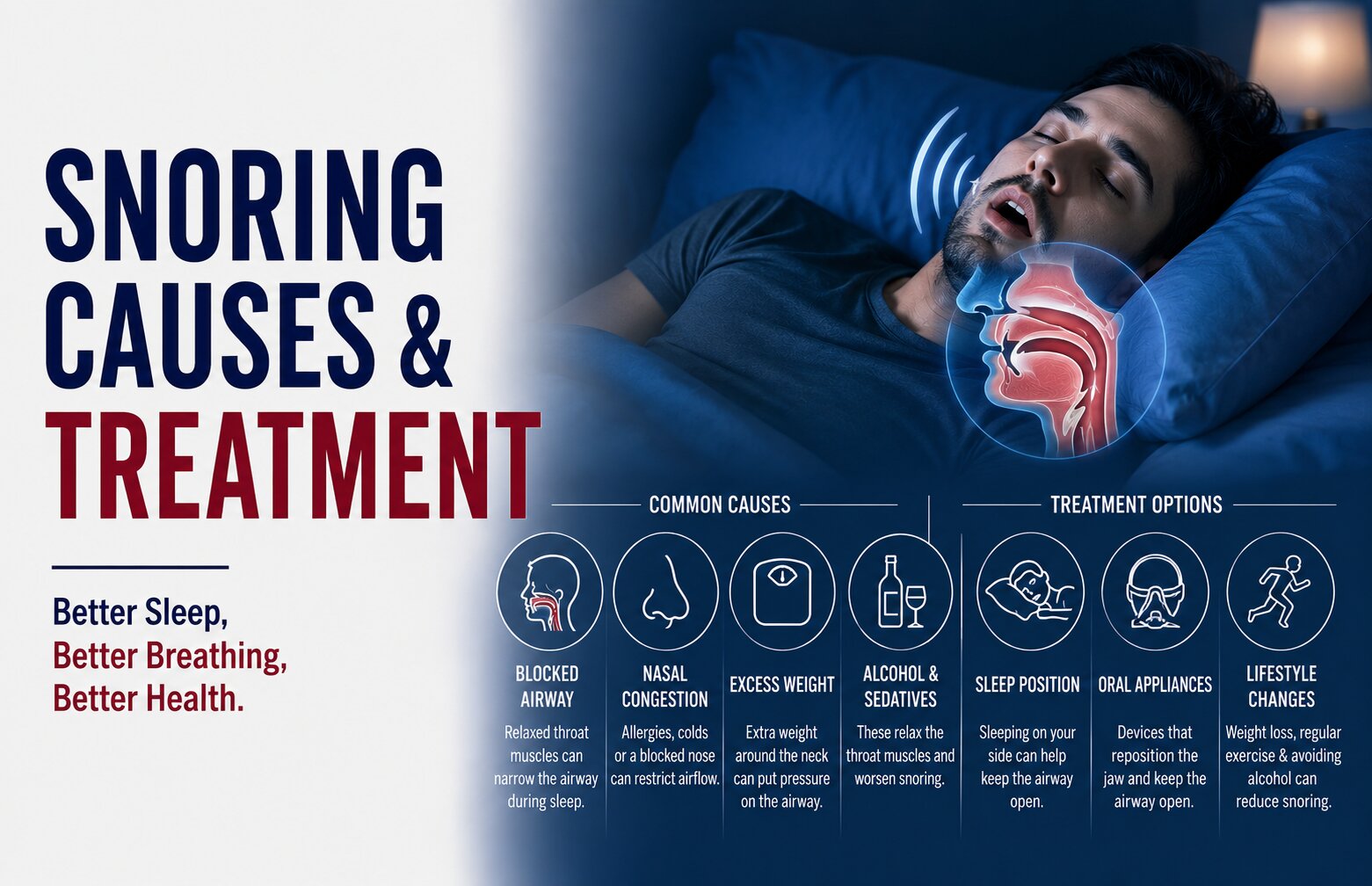
The sound comes from vibration. When the muscles of the throat relax during sleep, the airway narrows. Air passing through has to squeeze past soft tissue - the soft palate, the uvula, the base of the tongue. That squeezing creates sound.
Several things make this more likely.
Sleeping on the back allows the tongue to fall backward. The airway narrows. Snoring starts or worsens. A lot of people who snore only do it in this position.
Alcohol before bed relaxes throat muscles further than sleep alone does. Even moderate drinking in the evening can trigger snoring in people who wouldn't otherwise have it.
Nasal congestion forces mouth breathing during sleep. When air comes in through the mouth rather than the nose, the soft tissues at the back of the throat are more exposed and more prone to vibrating. In Dubai, where dust exposure and year-round allergens are common, allergic rhinitis is a frequent contributor to snoring that often goes untreated.
Weight, particularly around the neck, puts external pressure on the airway. The more that tissue compresses the throat from outside, the narrower the space available. Snoring becomes louder and more frequent.
Anatomy plays a role too. A longer soft palate, a recessed jaw, enlarged tonsils, or a naturally narrow throat can all create the conditions for snoring regardless of weight or sleeping position.
When Snoring Becomes More Than Just Snoring
Snoring on its own without breathing pauses, without daytime exhaustion, without other symptoms is often just a nuisance. Disruptive for a bed partner. Embarrassing when it's noticed. But not necessarily harmful.
The picture changes when snoring is accompanied by other signs.
Pauses in breathing observed by a partner are the most significant. These moments of silence followed by a gasp or snort indicate that the airway has closed completely, not just narrowed. That's obstructive sleep apnea, not simple snoring.
Waking up tired every morning, despite what should be enough sleep, is another signal. Not just occasionally tired. Consistently, heavily fatigued, with no amount of sleep making a clear difference.
Morning headaches that ease through the day are common in people with disrupted overnight breathing. So are dry mouth on waking, difficulty concentrating through the day, and mood changes that don't have another obvious explanation.
Many patients describe blaming their fatigue on work stress for years before anyone connected it to how they were sleeping. A common picture in Dubai, where long hours and high-pressure roles provide a convenient explanation for exhaustion that's actually coming from somewhere else entirely.
If snoring sounds like this, a sleep assessment is the right next step rather than trying remedies that address the sound without addressing the cause.
Snoring vs Sleep Apnea: The Key Difference
Snoring is the sound. Sleep apnea is the breathing disorder that can sit behind it.
Not everyone who snores has sleep apnea. But most people with obstructive sleep apnea do snore. The distinction is whether airflow is being partially restricted, which produces snoring, or whether it's stopping altogether, which is an apnea event.
You can't reliably tell the difference from symptoms alone. An overnight sleep study is what separates them. It records airflow, breathing effort, and oxygen levels through the night. The data shows whether breathing is simply noisy or whether it's genuinely stopping and causing oxygen drops.
This distinction matters enormously for treatment. The approaches overlap in some areas but diverge significantly in others.
Treatment Options for Snoring
What helps depends on what's causing it. There's no universal fix, which is why generic anti-snoring products produce mixed results.
Positional therapy is a useful starting point for people who mainly snore on their back. Learning to sleep on the side, and using positional aids to stay there, reduces snoring in a significant proportion of people. Body pillows, wearable position monitors that vibrate gently when back-sleeping is detected, and wedge pillows all serve this purpose. It takes a few weeks to build the habit consistently.
Managing nasal congestion removes a common driver. Treating allergic rhinitis with appropriate medication, using saline nasal rinses before bed, or addressing a deviated septum where present can restore nasal breathing and reduce snoring meaningfully. For patients in Dubai dealing with year-round dust allergies, this alone sometimes resolves the problem.
Reducing evening alcohol and avoiding sedative medications before bed lets the throat maintain more natural muscle tone during sleep.
Weight management, for patients where neck weight is contributing, reduces airway compression. The change doesn't have to be dramatic. Even modest weight reduction in the right area can produce noticeable improvement.
Mandibular advancement devices are custom-made by a dental specialist and worn during sleep. They hold the lower jaw slightly forward, which pulls the tongue base away from the back of the throat and keeps the airway more open. They work well for snoring and for mild obstructive sleep apnea. They're compact, quiet, and most patients find them manageable once adjusted to them.
CPAP therapy, the pressurised air mask used for sleep apnea, effectively eliminates snoring by keeping the airway fully open during sleep. It's not the first choice for simple snoring without sleep apnea, but where sleep apnea is confirmed, it resolves both the breathing disruptions and the sound.
Surgical options exist for specific anatomical causes. Removing enlarged tonsils when they're clearly contributing, correcting significant nasal structural issues, or addressing soft palate tissue in selected patients can produce lasting improvement. Surgery is considered when other approaches haven't worked and when the anatomy clearly points to a specific treatable cause.
Myofunctional therapy, which involves targeted exercises for the tongue and throat muscles, builds tone in the upper airway and reduces the tendency for tissue to collapse during sleep. It's a slower approach that requires consistent effort over months, but it has clinical support particularly for mild snoring and as a complement to other treatments.
Key Takeaways
Snoring happens when airflow is partially blocked and throat tissue vibrates. It's common and often manageable with simple changes.
When snoring is accompanied by breathing pauses, persistent tiredness, morning headaches, or difficulty concentrating, it may indicate obstructive sleep apnea rather than simple snoring.
A sleep study is the only reliable way to distinguish between snoring and sleep apnea.
Treatment depends on the cause. Positional changes, nasal congestion management, alcohol reduction, oral devices, and weight management all help in the right situations. CPAP is the standard treatment when sleep apnea is confirmed.
Surgery is an option for specific anatomical causes when other approaches haven't worked.