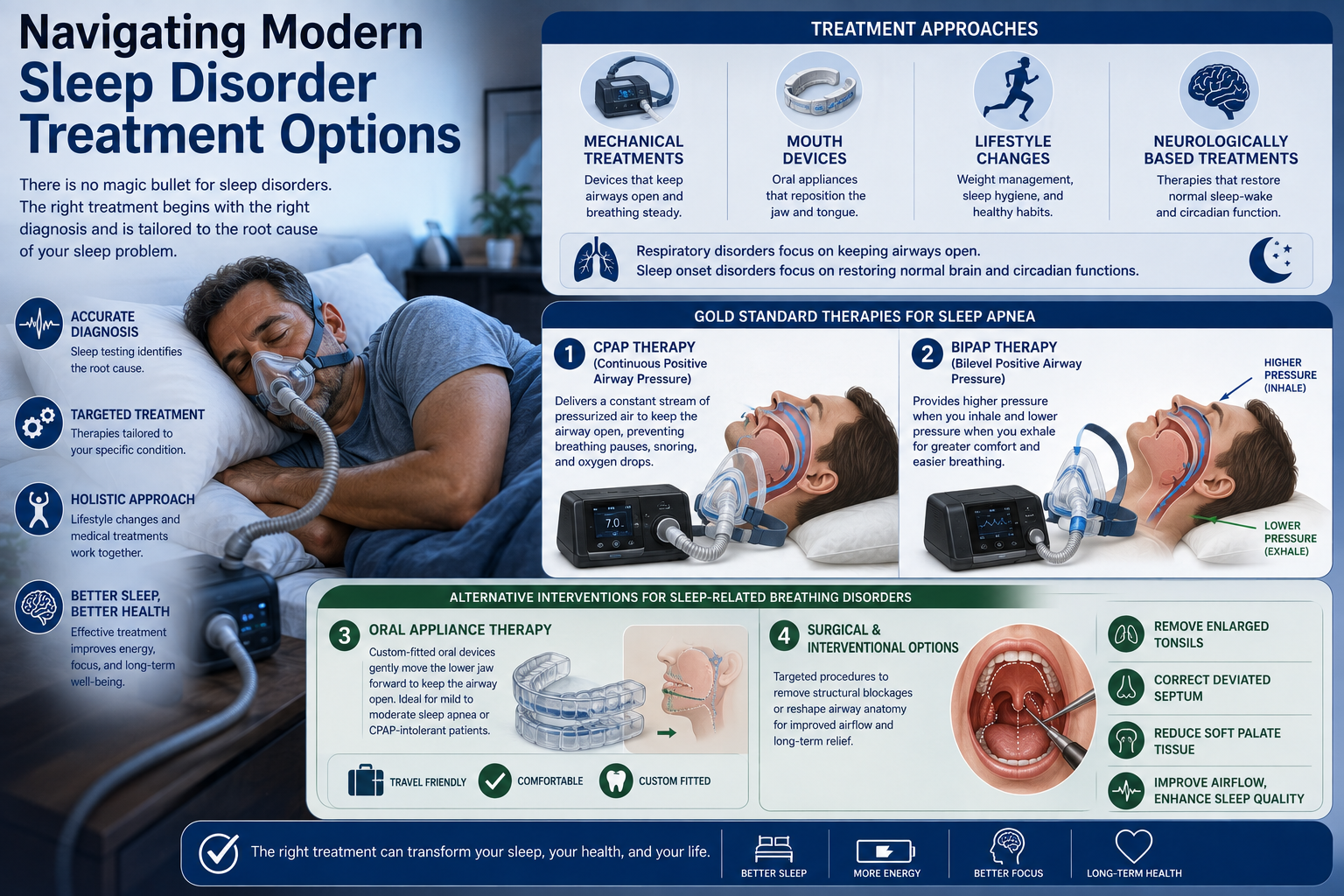
As far as the solution for sleep disorder is concerned, there is no magic bullet. The only way to solve this problem depends on correct diagnosis, which usually requires a full-scale clinical examination or sleep analysis. The treatment techniques for medical interventions can be divided into mechanical treatments, mouth devices, life-style changes, and neurologically based treatments.
In case of respiratory-related sleep disorders such as OSA, the aim will be to keep the air passages open. In cases of sleep onset disorder, however, the goal will be to reestablish normal nervous and circadian functions.
Gold Standard Therapies for Sleep Apnea
For individuals diagnosed with moderate to severe obstructive sleep apnea, mechanical positive airway pressure therapy remains the most effective and clinically proven intervention available.
1. CPAP Therapy (Continuous Positive Airway Pressure)
CPAP therapy is widely considered the gold standard for sleep apnea management. The system consists of a small, quiet machine that delivers a continuous, gentle stream of pressurized room air through a flexible tube to a mask worn over your nose or mouth.
By creating a "pneumatic splint" in the throat, the pressurized air keeps the soft tissues from collapsing during sleep, completely eliminating breathing pauses and snoring. This ensures your blood oxygen levels remain stable and prevents your brain from constantly waking you up to breathe.
2. BiPAP Therapy (Bilevel Positive Airway Pressure)
While CPAP works perfectly for many, some patients find it uncomfortable to exhale against a constant incoming stream of pressurized air. In these cases, a sleep specialist may recommend BiPAP therapy.
BiPAP machines utilize two distinct pressure settings: a higher pressure when you inhale to keep the airway open, and a significantly lower pressure when you exhale. This dual-pressure system makes breathing feel much more natural and is highly beneficial for individuals with specific lung conditions, severe compliance issues, or central sleep apnea.
Alternative Interventions for Sleep-Related Breathing Disorders
If positive airway pressure devices aren't the right fit for your specific anatomy or lifestyle, several secondary clinical options exist.
3. Oral Appliance Therapy
For patients with mild-to-moderate obstructive sleep apnea, or those who travel frequently and cannot tolerate a CPAP mask, an oral appliance is an excellent alternative.
Custom-fitted by a specialized dentist in coordination with your medical team, these small, plastic devices are worn in the mouth during sleep—much like a sports mouthguard or an orthodontic retainer. They work by gently shifting the lower jaw forward, which naturally pulls the tongue away from the back of the throat and widens the airway.
4. Surgical and Interventional Options
When structural blockages—such as severely enlarged tonsils, a deviated nasal septum, or an excessively redundant soft palate—are the root cause of the breathing obstruction, targeted surgical interventions may be considered to optimize the upper airway anatomy.
Clinical Approaches to Insomnia Treatment
However, not all cases of insomnia come as a result of structural problems within the airways. Millions of people struggle with the inability to fall or stay asleep despite the absence of any structural blocks.
In contemporary insomnia treatment, there is a move from heavy reliance on medications to address the problem. These drugs become ineffective over time, causing a condition referred to as daytime drowsiness. In contemporary medicine, the focus lies heavily on Cognitive Behavioral Therapy for Insomnia (CBT-I).
CBT-I refers to a therapy program that assists you to recognize and change unhealthy thoughts and behaviors regarding sleep to those that contribute positively to your sleep pattern. Moreover, your specialist may opt to prescribe temporary medication along with circadian rhythm regulation.
Seeking Sleep Disorder Treatment in Dubai
Residing in an urban metropolis brings certain aspects of lifestyle that could influence your sleep. People who are seeking sleep disorder treatment Dubai are usually faced with unusual working schedules, constant traveling through different time zones and being in an artificially created environment for long periods of time.
All of the mentioned issues may lead to the aggravation of disorders such as insomnia, as well as conceal the symptoms of sleep apnea. In case when you suffer from persistent drowsiness during the day despite lying in bed for many hours, it is important not to diagnose yourself with sleeping pills that you can buy in pharmacies.