A lot of people sit with sleep apnea symptoms for years before getting checked. Tiredness puts them down to a busy life. Snoring a partner has been mentioned more than once. Sleep that never quite feels restful. They know something isn't right, but getting diagnosed feels uncertain or complicated.It isn't, really.
The process is more direct than most people expect. No guesswork. No invasive steps. It follows a clear path from first conversation to results to a plan. Each step builds on the last.This is what that path looks like. It Starts with Symptoms and Taking Them Seriously
Diagnosis begins before any test is ordered. It begins with the conversation.
Most patients come in with one or more familiar symptoms. Tiredness that stays no matter how many hours they slept. Morning headaches that clear by mid-morning. A partner who's flagged the snoring, or noticed pauses in breathing. Trouble focusing through the day. Dozing off when sitting still.
Some come in because a partner pushed them to. Some because they read about sleep apnea and recognised themselves. Some come in for something else and mention the fatigue almost as an afterthought.
Whatever brings someone in, the symptoms get taken seriously. Not explained away as stress, or age, or too much work. Looked at properly.That shift is where it starts.
What the First Consultation Covers
The first appointment is a detailed conversation. It covers more ground than people sometimes expect.
We start with symptom history. How long has it been present? Whether it's getting worse over time. What sleep itself feels like is falling asleep easy, staying asleep hard, does waking up feel refreshing or not. Morning headaches, dry mouth on waking, needing the bathroom at night. These details matter.
If a bed partner has noticed anything, that's useful. Snoring patterns, whether it's constant or stops and starts, whether there are pauses followed by a gasp or shift. These observations can be some of the most helpful things in the room, because the person sleeping through the episodes doesn't feel them.
Medical history gets looked at carefully. High blood pressure, heart problems, diabetes, thyroid issues, previous strokes. All of these have clear links to sleep apnea. We also go through current medications. Some affect how well people sleep or make breathing at night harder.
Weight history is part of it too. Whether weight has gone up over the same period that sleep problems developed. Family history matters as well, since jaw shape and airway size tend to run in families.
Lifestyle comes up naturally. Alcohol in the evenings. Smoking. Sleep position. Shift work. None of this takes long, but it builds a picture.
The Physical Examination
After the history, the physical side focuses on areas most relevant to breathing during sleep.
We look at the throat and airway directly. The size of the tonsils, where the soft palate sits, how much space there is at the back of the throat. A scoring method called the Mallampati score helps assess how crowded that space is. A narrower, more packed airway goes with higher sleep apnea risk.
Jaw position matters. When the lower jaw sits further back than usual, it reduces the space at the tongue base and makes the airway more likely to close during sleep.
Neck size gets measured. A larger neck reflects more fat tissue pressing around the airway from outside. It's one of the more reliable physical signs we look at.
Nasal passages are checked where relevant. Ongoing nasal blockage can push someone into mouth breathing at night. That changes tongue position and makes airway collapse easier.
Questionnaires That Help Measure How You Feel
Alongside the conversation and physical check, we use short, simple questionnaires to put a number on how symptoms are affecting daily life.
The Epworth Sleepiness Scale is the most used one. It asks how likely you'd be to doze off in eight common situations — sitting quietly, watching TV, as a car passenger, stopped briefly in traffic. Each is scored zero to three. A total above ten points to daytime sleepiness that needs looking into.
The STOP-BANG tool looks at snoring, tiredness, observed pauses in breathing, blood pressure, body weight, age, neck size, and sex. Higher scores mean a greater chance of moderate to severe sleep apnea.
They don't diagnose anything on their own. They add a clear, measured layer to what the patient describes. And they help decide what kind of sleep study fits best.
The Sleep Study: What It Is and What It Records
The sleep study is the key diagnostic step. It records what's actually happening during sleep. Not what someone reports, but real data from the night itself.There are two main types.
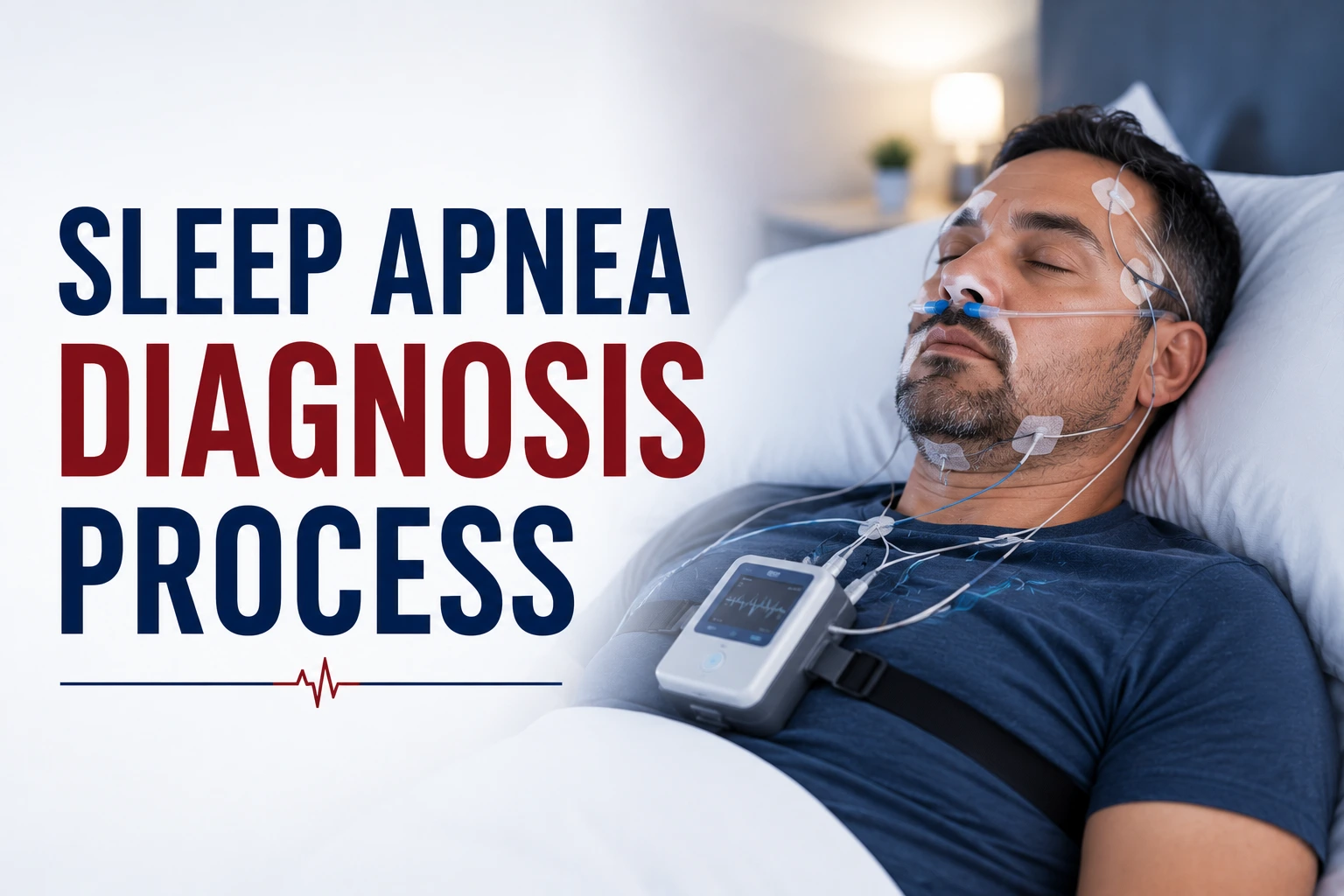
A home sleep test is what most patients do. You collect a small device from the clinic and wear it overnight at home. It records airflow through the nose and mouth, breathing effort from the chest, oxygen levels in the blood, heart rate, and body position. A small clip goes on the finger. A few sensors sit on the chest and face. Most people find it easy enough to sleep with after the first few minutes.
You return it the next morning. The data gets downloaded and looked at. Results come back within a few days.
A full in-lab sleep study records more. Brain activity, eye movement, leg muscle activity, full breathing data, heart rhythm, and oxygen levels all at once. A trained technician is there through the night to make sure the equipment runs correctly.
This version is used when the picture is more complex. When central sleep apnea is suspected. When other sleep conditions like narcolepsy or restless leg syndrome need checking at the same time. When a home test result needs more detail to make sense of.
For most patients with clear symptoms of obstructive sleep apnea, the home test gives everything needed. It's easier to arrange and less disruptive. It still produces the data needed to diagnose and treat.
What the Results Mean
The main number from a sleep study is the AHI score. It counts the average number of breathing pauses per hour of sleep.
- Below five is normal for adults.
- Five to fourteen is mild sleep apnea.
- Fifteen to twenty-nine is moderate.
- Thirty or above is severe.
But that number alone doesn't tell the whole story. The pattern matters too. Whether pauses cluster in certain positions or at certain stages of sleep. How far oxygen drops and for how long. Whether the events are obstructive or central.
Two people can have the same AHI but need very different treatment. What's in the detail shapes both the diagnosis and the plan. Results get explained in the context of everything gathered in the consultation, not as a standalone figure.
What Happens After Diagnosis
Once sleep apnea is confirmed and we understand its type and severity, the treatment conversation begins.
For moderate to severe obstructive sleep apnea, CPAP therapy is the standard starting point. It delivers steady pressurised air through a mask during sleep, keeping the airway open. Most people adapt within a few weeks. Settings are set to match what the sleep study showed.
For milder cases, or where CPAP isn't well tolerated, we look at other options. Custom oral devices move the jaw forward during sleep to keep the airway open. Positional therapy helps people whose sleep apnea is mainly linked to sleeping on their back. Weight management, cutting back on alcohol, and improving sleep habits are discussed alongside whichever device is chosen.
For central or mixed sleep apnea, different devices are needed. The treatment has to fit the mechanism, not just the score.
Follow-up is set after treatment starts. We check how the patient feels, review device data where we can, and adjust settings or approach if something isn't working. A repeat sleep study may be done later to confirm treatment is doing what it should.
Diagnosis is the step that makes management possible. The real work begins after it.
Common Concerns About Getting Tested
Many patients delay getting checked because of what they think the process involves. A few things are worth addressing directly.
The home sleep test is not difficult. The sensors are easy to attach, the device is small, and most people sleep well enough for the data to be usable. There's no hospital stay.
A result showing no significant sleep apnea is still useful. It rules out one cause and points the search elsewhere.
A result showing sleep apnea, even significant sleep apnea, is not alarming news. It's manageable. Diagnosis is what makes that possible. The patients who feel the worst are usually the ones who went the longest without knowing.
Getting tested doesn't commit anyone to a specific treatment. It gives information. What's done with that is a conversation.
How Dr. Syed Approaches the Diagnosis
At Al Zahra Hospital in Dubai, Dr. Syed Arshad Husain brings over four decades of experience in respiratory and sleep medicine to each assessment.
The consultation is thorough and unhurried. Every relevant part of a patient's history gets covered. The physical check is detailed. The type of sleep study is matched to each person's situation rather than using the same approach for everyone.
Results are reviewed personally and explained clearly. Not just the numbers, but what they mean, how serious the situation is, what the options look like, and what realistic outcomes of treatment are.
For patients in Dubai from different backgrounds and with different lifestyles, the treatment plan is shaped around what's practical and sustainable for each person. Follow-up is structured. Progress is tracked. Plans get adjusted when they need to be.