Getting enough sleep is key to staying healthy, but a lot of people around the world deal with breathing problems that make it tough to get the rest they need. Many people know about loud snoring or feeling tired during the day, which often comes with sleep apnea complications. However, not as many understand how much damage this condition can do to the whole body if it’s ignored.
How Sleep Apnea Affects Your Body
Your body struggles for oxygen when breathing stops during sleep, sometimes hundreds of times every night. This leads to a series of stress responses that harm several organs. The most concerning are the untreated sleep apnea risks on your heart and blood vessels.
Sleep Apnea and Heart Disease: A Risky Connection
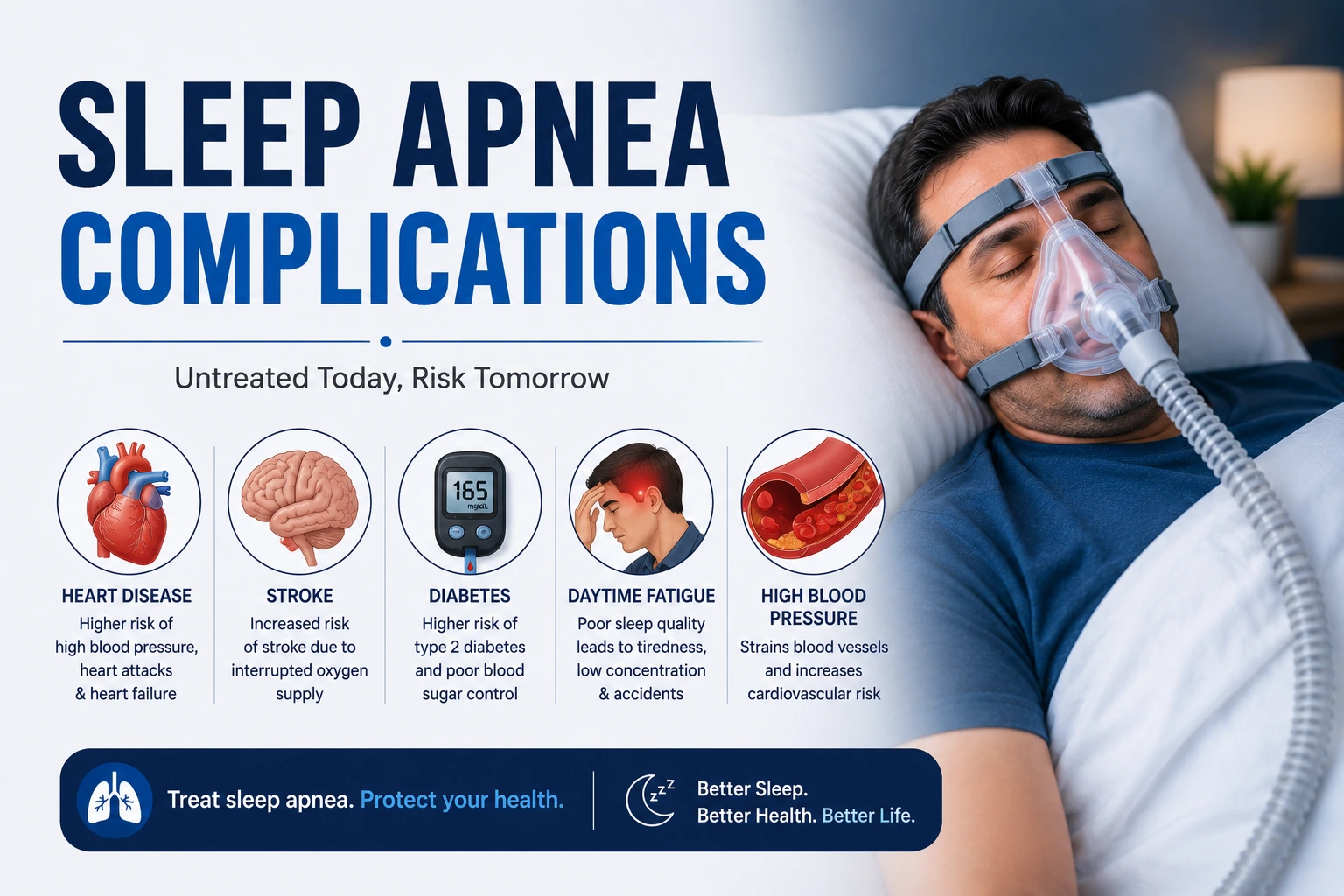
Sleep apnea heart disease happen when blood oxygen levels keep dropping, which puts extra strain on your heart. This extra effort may result in:
- High Blood Pressure: Spikes in blood pressure during the night can turn into a long-term problem. This puts extra pressure on the heart and blood vessels.
- Irregular Heartbeats (Arrhythmias): Atrial fibrillation, one of the most common types of irregular heart rhythms, often affects people who don’t treat their sleep apnea.
- Higher Risk of Heart Attack and Stroke: When high blood pressure, heart strain, and inflammation combine, the chances of having a heart attack or stroke go up.
- Heart Failure: Continuous stress can weaken the heart muscle. This makes it harder for the heart to pump blood.
These risks are not just ideas on paper. They serve as the main cause of sleep apnea long term effects, which take a toll on life quality and even shorten lifespan.
Other Major Health Concerns
Untreated sleep apnea doesn’t just harm the heart. It has an impact on many other serious health issues. Learning about these sleep apnea health risks helps to see the bigger picture of how much damage this disorder can cause throughout the body.
- Metabolic and Endocrine Problems
Sleep apnea has a close connection with type 2 diabetes and metabolic syndrome. Poor sleep quality and low oxygen levels make it harder for the body to process insulin. This results in insulin resistance and higher blood sugar. - Cognitive and Mental Health Issues
Ongoing sleep loss from apnea prevents the brain from getting proper recovery. This causes:
Daytime Sleepiness and Brief Sleep Spells: Making accidents at work or on the road more likely.
Struggles with Memory and Focus: People may confuse these symptoms with the effects of ageing or stress.
- Mood Disorders: Untreated sleep apnea often has a link with much higher rates of depression and anxiety.
- Liver Complications: Studies suggest a clear relationship between sleep apnea and non-alcoholic fatty liver disease (NAFLD). Experts believe that intermittent hypoxia plays a role in causing liver inflammation and fibrosis (scarring).
- Worsening of Existing Respiratory Conditions. Patients dealing with long-term lung problems such as Chronic Obstructive Pulmonary Disease (COPD) often face added challenges when sleep apnea is also present. This combination, called "overlap syndrome," can cause worse low oxygen levels in the blood and speed up the worsening of lung function. Dr Syed plays an essential role in treating complex cases of both COPD and sleep-related conditions.
The Importance of Pulmonary Expertise: A Perspective
Sleep-disordered breathing is a complicated issue that combines elements of neurology and lung health. This makes reaching out to an expert like Dr Syed essential. His knowledge of how sleep breathing impacts overall well-being is extensive.
In his clinic, he focuses on steps to avoid sleep apnea complications:
- Detailed Evaluation: Experts move past simple questionnaires to figure out the physical causes behind the breathing problem.
- Thorough Diagnosis: They rely on the latest tools available to define the type of sleep apnea and how serious it is with precision.
- Coordinated Care: Sleep apnea occurs on its own. Experts understand the need to manage it while addressing issues like allergic asthma, interstitial lung disease, or keeping track of treatments for other conditions. Viewing the whole picture matters.
Why Treating Can Help Protect You
The message is simple. The dangers of untreated sleep apnea risks are serious, but the good news is they are avoidable. Getting the right treatment can stop further harm, bring blood pressure down, steady your heartbeat, boost your mood and mental clarity, and give you back your energy.
Taking action does more than extend your lifespan. It helps you live better by stopping the long-term effects of sleep apnea before they stick around. It also lets you enjoy refreshing, healthy sleep again.
Conclusion
Breathing keeps your body healthy. Don’t let a manageable sleep issue ruin your quality of life. If you or someone close to you snores loudly, struggles to breathe while sleeping, or feels tired all day, it’s time to get help from a specialist.
Dr Syed Arshad provides detailed assessments and tailored care for all sleep-related breathing problems. His vast expertise and focus on patients help you work toward improved sleep and overall well-being.
Schedule your appointment today to protect your health from untreated sleep apnea risks.