A lot of people come in thinking sleep apnea is a sleep problem. Snoring, tiredness, waking up groggy. Something annoying, but manageable.
What they don't realise is how much it's doing to the heart.
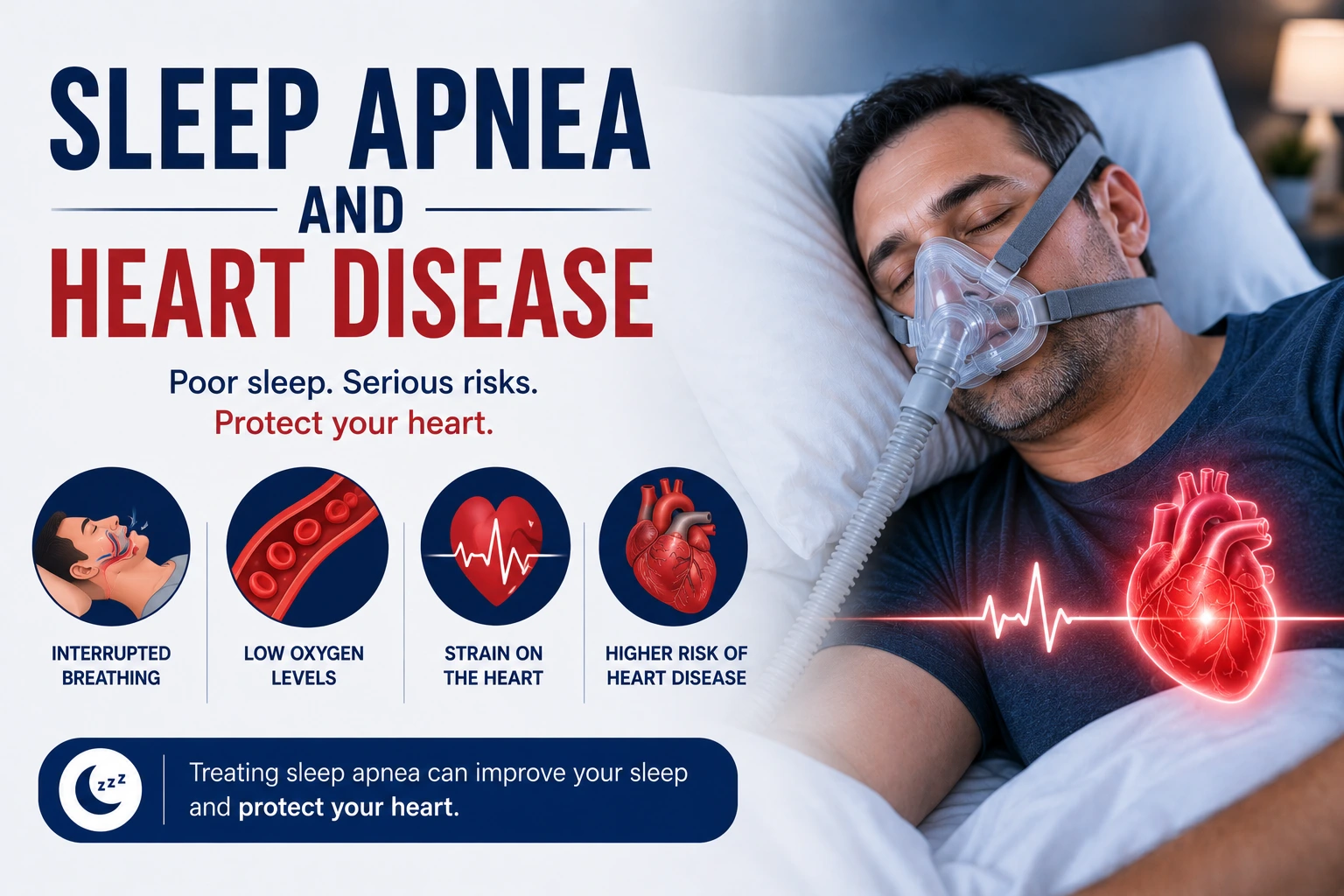
Every time breathing stops during sleep, the heart responds. Blood pressure spikes. The nervous system fires. Oxygen drops. The heart works harder than it should be working at two in the morning. And when this happens dozens of times a night, for months or years, the cumulative toll becomes significant.
Sleep apnea and heart disease are far more closely linked than most people understand. And that link runs in both directions.
What Sleep Apnea Does to the Body Every Night
When breathing pauses during sleep, a sequence of events unfolds rapidly. Oxygen levels in the blood fall. Carbon dioxide builds up. The brain detects the shift and triggers a stress response to restore breathing.
That stress response involves the body's fight-or-flight system. Adrenaline is released. The heart rate climbs. Blood pressure rises sharply. Blood vessels tighten.
Then breathing restarts. The episode ends. Things settle.
Then it happens again.
In moderate to severe sleep apnea, this cycle repeats thirty, fifty, sometimes a hundred times a night. Each episode is brief. But the cumulative effect on blood pressure, the heart muscle, and the blood vessels is anything but brief.
This is what makes sleep apnea a cardiovascular problem, not just a sleep problem.
Blood Pressure: The Most Direct Connection
High blood pressure is one of the most consistent and well-established complications of untreated sleep apnea.
Each time breathing stops, blood pressure spikes. Normally, blood pressure falls during sleep. The body uses those overnight hours to rest the cardiovascular system. But in sleep apnea, that restorative drop doesn't happen. Instead, blood pressure surges repeatedly through the night. Over time, those surges push resting blood pressure permanently higher.
Many patients with high blood pressure that's hard to control turn out to have undiagnosed sleep apnea. Medications help to some extent, but the underlying cause keeps pushing pressure back up.
When sleep apnea is treated effectively, blood pressure often comes down. Sometimes meaningfully. For some patients, it improves to a degree that their medications need to be reduced.
That's how direct the relationship is.
Atrial Fibrillation: Why the Heart's Rhythm Gets Disrupted
Atrial fibrillation, an irregular and often rapid heart rhythm is one of the cardiovascular complications most closely associated with sleep apnea.
The connection comes from several directions. The repeated drops in oxygen stress the heart's electrical system. The surges in blood pressure stretch the chambers of the heart over time. The sustained activation of the stress response keeps the heart in a state of elevated alertness that disrupts normal rhythm.
People with untreated sleep apnea develop atrial fibrillation at significantly higher rates than those without it. And in people who already have atrial fibrillation, untreated sleep apnea makes it harder to manage. Treatments for the rhythm problem whether medication or procedures work less well when the underlying sleep apnea isn't also addressed.
This is something we specifically look for when patients with atrial fibrillation come in. Treating the heart rhythm without asking about sleep misses a piece of the picture that can make a real difference.
Heart Attack Risk and What Drives It
The pathway from sleep apnea to heart attack isn't one single mechanism. It's several working together.
Repeated drops in oxygen promote inflammation inside blood vessels. Over time, this damages the inner lining of the arteries, the surface that should stay smooth and flexible. When that lining is damaged, it becomes more prone to plaque buildup. Arteries narrow. Blood clots form more easily.
The sustained activation of the stress response through the night also keeps the blood in a slightly more clotting-prone state. The heart works harder. The coronary arteries supplying the heart itself are under recurring strain.
People with moderate to severe untreated sleep apnea have a higher rate of heart attacks than those without it. The risk is particularly elevated in the early morning hours, when sleep apnea episodes tend to be more frequent and oxygen levels may be at their lowest point.
This is why treating sleep apnea isn't just about feeling less tired. It's about reducing genuine cardiac risk.
Stroke: A Risk That Often Goes Unmentioned
The same processes that raise heart attack risk also raise the risk of stroke.
Repeated blood pressure surges, inflammation in blood vessel walls, increased tendency for blood to clot, irregular heart rhythm these are all pathways through which sleep apnea raises stroke risk.
Atrial fibrillation itself is one of the leading causes of stroke. The irregular heart rhythm allows blood to pool and clot in the chambers of the heart. Those clots can travel to the brain. In people with both sleep apnea and atrial fibrillation, the risk compounds.
Research shows that people with untreated sleep apnea have a substantially higher rate of stroke compared to those without it, even after accounting for other risk factors like age and weight.
After a stroke, untreated sleep apnea also interferes with recovery. The brain needs good quality sleep to repair and adapt. Fragmented, oxygen-poor sleep works directly against that.
Heart Failure: When the Relationship Gets More Complex
Heart failure and sleep apnea have a particularly complex relationship. Each one makes the other worse.
Untreated sleep apnea strains the heart over time. The repeated surges in blood pressure and the increased workload on the heart muscle can contribute to changes in heart function. The left side of the heart which pumps blood to the rest of the body can thicken and stiffen from years of elevated pressure demands.
When heart failure is already present, the circulation becomes less efficient. Fluid can accumulate in the airways at night, narrowing the breathing passage further. The brain's control of breathing becomes less stable. A specific pattern called Cheyne-Stokes respiration can develop, where breathing cycles through phases of increasing effort, then decreasing effort, then stops briefly before starting again. This is a form of central sleep apnea seen in people with significant heart failure.
Managing sleep apnea in heart failure patients requires careful assessment. The treatment approach needs to be matched to the specific type and mechanism of sleep apnea standard CPAP works well for obstructive events, but certain adaptive devices are needed for the central pattern, and some devices are contraindicated in specific types of heart failure.
Getting this right makes a real difference to outcomes.
What Happens to Blood Vessels Over Time
Beyond the direct effects on blood pressure and heart rhythm, sleep apnea causes changes to blood vessels themselves.
The inner lining of blood vessels the endothelium plays a critical role in regulating blood flow, preventing clotting, and keeping arteries flexible. Repeated drops in oxygen during sleep cause oxidative stress that damages this lining.
Over time, damaged vessel walls become less elastic. They don't dilate and contract as effectively. Blood flow becomes less responsive. Atherosclerosis the buildup of plaque inside arteries progresses faster.
These changes don't produce symptoms on their own. They build quietly. But they raise the baseline risk for every cardiovascular event downstream.
This is part of why the cardiovascular consequences of sleep apnea accumulate over years rather than appearing suddenly.
What CPAP Treatment Does for the Heart
Treating sleep apnea particularly with CPAP therapy, which keeps the airway open through the night, interrupts the mechanisms driving cardiovascular risk.
Blood pressure drops. In patients with high blood pressure, consistent CPAP use is associated with measurable reductions in both daytime and overnight blood pressure. For some patients, the reduction is clinically significant.
Heart rhythm stabilises. Atrial fibrillation responds better to treatment in people whose sleep apnea is also managed. Recurrence rates after procedures to restore normal rhythm are lower when sleep apnea is addressed alongside the cardiac treatment.
The inflammatory processes driven by overnight oxygen drops reduce. Blood vessel function improves. The stress response that keeps the cardiovascular system in a state of nighttime strain settles.
None of this happens overnight. Consistent use over weeks and months is what produces these changes. But the evidence for cardiovascular benefit with effective sleep apnea treatment is now substantial.
Who Should Be Thinking About This
If you have high blood pressure that's difficult to control, sleep apnea is worth investigating specifically. Many patients in this situation are on two or three medications and still not at target and the reason is an underlying sleep disorder that's never been assessed.
If you have atrial fibrillation, asking about sleep quality as part of your cardiac management is reasonable. If you snore, wake unrefreshed, or feel persistently tired, the overlap is worth exploring.
If you have heart failure, sleep apnea assessment should be part of your ongoing care. The two conditions affect each other, and managing one without the other leaves a significant gap.
And if you've had a stroke or heart attack and you're in recovery, sleep quality is part of rehabilitation. Fragmented, oxygen-deprived sleep slows healing. Addressing sleep apnea if it's present can make a real difference to recovery trajectory.
You don't have to be struggling with obvious sleep symptoms to be at risk. Many patients with significant sleep apnea describe themselves as sleeping fine. The breathing pauses don't always wake them in a way they'd recognise. The tiredness gets explained away. The heart is still under strain every night.
How Dr. Syed Approaches This
At Al Zahra Hospital in Dubai, Dr. Syed Arshad Husain assesses sleep apnea with cardiovascular health firmly in mind.
The consultation covers symptom history in full sleep quality, daytime tiredness, headaches, any observations from a bed partner. But it also covers cardiovascular history. Blood pressure control, heart rhythm issues, heart failure history, previous cardiac events. The connections between these conditions shape what kind of sleep study is arranged and how results are interpreted.
A home sleep study records airflow, breathing effort, oxygen levels, and heart rate through the night. For patients with more complex cardiovascular conditions, the assessment may involve closer coordination with their cardiologist.
Treatment is matched to the individual. CPAP is the standard approach for moderate to severe obstructive sleep apnea and produces the strongest evidence for cardiovascular benefit. For patients who struggle with CPAP, alternative devices are explored. Lifestyle changes that reduce cardiovascular risk also often reduce sleep apnea severity weight management, alcohol reduction, sleep position.
The aim is not just better sleep. It's a lower-risk cardiovascular profile going forward.