
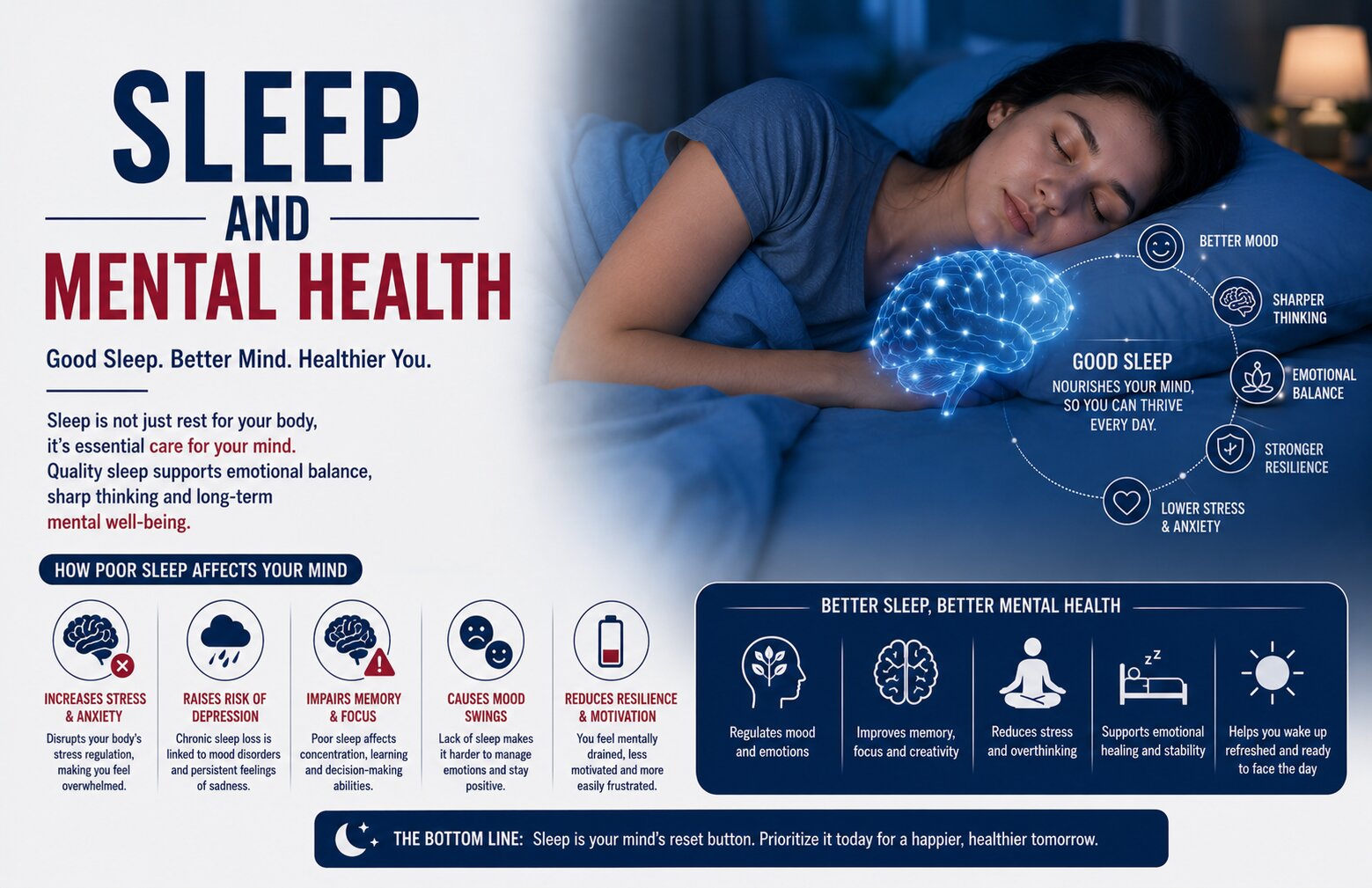
What Sleep Deprivation Does to the Brain and Mood
The brain regions most sensitive to sleep loss are precisely those involved in emotional regulation. The prefrontal cortex which governs rational thinking, impulse control, and the ability to contextualise emotional responses becomes less active with insufficient sleep. The amygdala, which processes emotional reactions and threat responses, becomes more reactive. The result is a brain that over-responds emotionally and under-applies rational perspective which is a reasonable description of what anxiety and low mood feel like from the inside.
A useful way to think about it: sleep deprivation does not just make you feel emotionally fragile. It creates the neurological conditions in which emotional fragility becomes the default state.
Cortisol plays a role here too. Sleep deprivation raises cortisol levels, the body's primary stress hormone. Elevated cortisol over time is associated with anxiety, low mood, impaired memory, and difficulty regulating the stress response. For patients already managing stress-related conditions, consistently poor sleep adds fuel to a fire that is already difficult to manage.
REM Sleep and Emotional Processing
REM sleep, the stage associated with vivid dreaming plays a specific and important role in emotional health that goes well beyond dream content.
During REM sleep, the brain processes emotionally significant experiences from the day. Research suggests this stage helps to integrate emotional memories in a way that preserves the factual content while reducing the emotional charge attached to it. In other words, REM sleep helps the brain process difficult experiences without the pain staying at full intensity. It is one of the reasons a night of good sleep can genuinely make a problem feel more manageable and why chronic REM disruption leaves people feeling emotionally overwhelmed by experiences they should be able to cope with.
This mechanism is particularly relevant in post-traumatic stress disorder. PTSD is associated with severely disrupted REM sleep, and the nightmares that characterise it appear to represent a failure of the normal emotional processing that REM should provide. The emotional weight of traumatic memories does not reduce because the processing cycle keeps being interrupted.
Sleep Apnea and Mental Health A Connection That Gets Missed
Many patients with obstructive sleep apnea are eventually referred for depression or anxiety before anyone investigates their sleep properly. The symptoms overlap significantly: persistent fatigue, low motivation, poor concentration, emotional flatness, irritability, withdrawal from activities they used to enjoy.
The mechanism is not mysterious. Obstructive sleep apnea causes repeated fragmentation of sleep including REM sleep throughout the night. The person may spend eight hours in bed but cycle through dozens or hundreds of partial arousals that prevent them completing the sleep stages their brain needs. Oxygen drops repeatedly. The stress response activates repeatedly. Cortisol rises. The neurological consequences of this pattern are, over time, essentially indistinguishable from those of chronic psychological stress.
Several studies have found significantly elevated rates of depression and anxiety in patients with untreated obstructive sleep apnea. More importantly, effective treatment of sleep apnea with CPAP therapy or other appropriate interventions has been shown to produce measurable improvements in mood, anxiety levels, and quality of life. In some patients, it resolves what had been diagnosed as depression without any antidepressant treatment.
This does not mean every depressed patient has sleep apnea. But it does mean that a patient presenting with mood symptoms alongside any signs of sleep-disordered breathing deserves a proper sleep evaluation before assuming the diagnosis is purely psychiatric.
Insomnia and Anxiety How Each Feeds the Other
Insomnia and anxiety share a particularly tight relationship. Anxiety creates physiological and cognitive arousal that makes sleep onset difficult racing thoughts, muscle tension, hypervigilance. Poor sleep then raises the anxiety baseline the following day, making it harder to wind down the next night. Over time, many patients develop what is called sleep-related anxiety specific fear and dread around the act of sleeping itself.
This is more common than most people admit. Patients describe lying in bed watching the clock, catastrophising about how tired they will be tomorrow, trying harder and harder to force sleep and achieving the opposite. The effort itself becomes the problem. Sleep requires a degree of physiological and mental surrender that anxiety directly prevents.
CBT-I Cognitive Behavioural Therapy for Insomnia was specifically developed to break this cycle. It addresses the thought patterns, behaviours, and physiological arousal that perpetuate insomnia, rather than relying on medication to override them. It has strong evidence supporting its effectiveness not just for sleep but for the anxiety and mood symptoms that co-occur with chronic insomnia. For many patients it produces more durable improvement than sleeping tablets alone.
When to Take the Sleep-Mental Health Connection Seriously
Not every low mood is a sign of a sleep disorder, and not every bout of insomnia reflects a psychiatric condition. But certain patterns are worth taking to a doctor.
Seek a clinical evaluation if:
- You have been treated for depression or anxiety without full improvement, and your sleep remains poor
- Mood symptoms began at the same time as significant sleep deterioration
- A partner has noticed snoring, gasping, or pauses in your breathing during sleep
- You wake consistently unrefreshed despite what appears to be adequate hours in bed
- You feel anxious specifically about sleep dreading bedtime, watching the clock, catastrophising about tiredness
- Fatigue and emotional flatness persist despite addressing obvious lifestyle and stress factors
These patterns point toward a sleep component that, if addressed properly, can change the trajectory of mental health treatment significantly.
Key Takeaways
- The relationship between sleep and mental health is bidirectional poor sleep causes mood problems, not just the other way around
- Sleep deprivation reduces prefrontal activity and amplifies amygdala reactivity, creating the neurological conditions for anxiety and depression
- REM sleep processes emotional experiences; disrupted REM leaves emotional difficulties unresolved and harder to manage
- Obstructive sleep apnea is a significant and frequently missed contributor to depression, anxiety, and emotional dysregulation
- Treating sleep apnea has been shown to measurably improve mood and reduce anxiety symptoms
- CBT-I addresses both insomnia and the anxiety that perpetuates it, with evidence for durable improvement
- Persistent mood symptoms alongside any signs of disturbed sleep warrant a clinical evaluation that includes sleep assessment