In other words, preparation for sleep improvement is simply creating an atmosphere in which your brain will be able to unwind. This goes beyond your pre-bed routine and should be considered as a 24-hour process.
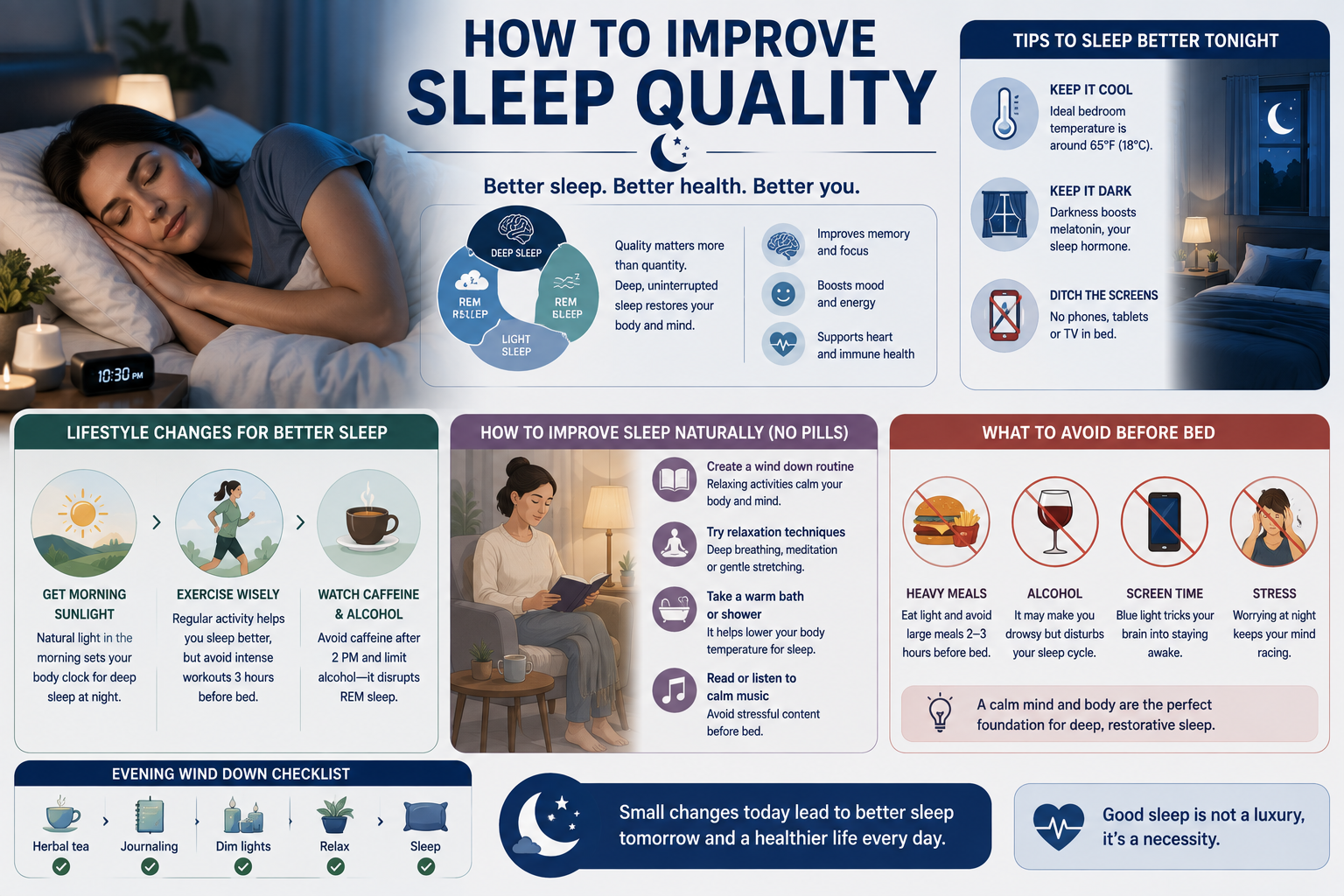
There are three kinds of lifestyle alterations one can make to sleep better: timing, consumption, and environmental factors. Firstly, it is necessary for your body to have a set routine because your body reacts positively to predictability, and going to bed and waking up at the same time every day is very important. Secondly, you should think of what you feed your body: cutting caffeine intake in the afternoon, and skipping late heavy meals or alcohol will help your digestive system to let your brain unwind. Lastly, your sleeping environment needs to send a message to your brain that it is time for rest, and for this purpose, your bedroom needs to be cold, dark, and free from any kind of blue light.
How to Improve Sleep Quality
In order to learn how to improve sleep quality, it is important to realize that “quality” and “quantity” do not mean the same. One can stay in bed for nine hours, yet if his sleep is fragmented, superficial and restless, he will be tired after waking up.
To improve the quality of sleep one needs to ensure maximum periods of deep sleep stages which include REM and slow-wave sleep. When sleeping in this stage, the body restores itself, and the brain forms new memories. In order to enter the deep sleep stage, one’s brain requires a proper runway. If one goes to bed with an elevated heartbeat from a late workout or a busy brain due to the use of social media, then for the first few hours, his body tries to relax, depriving him of the valuable deep sleep.
Exploring the Specifics
Let's look at the actionable steps you can start implementing today. If you are searching for real, sustainable ways to improve sleep quality, start here.
Tips to Sleep Better Tonight
In case of wanting to see some immediate results, then think of temperature and light. You need to experience a slight decrease in your core body temperature before going to sleep. Make sure your bedroom remains cool enough, and the ideal temperature is said to be about 65°F (18°C). Also, dark environments promote the production of melatonin, which is a sleep hormone. Use blackout curtains and a sleep mask. Among some of the best ways to improve your sleep, ensure that you have no screens in the bedroom.
Lifestyle Changes for Better Sleep: The Daytime Routine
What you do at 10:00 AM affects how you sleep at 10:00 PM.
- Get Morning Sunlight: Exposure to natural sunlight first thing in the morning is the strongest signal you can send to your brain to wake up, which in turn sets the timer for when you will feel sleepy at night.
- Exercise Wisely: Regular physical activity tires out your body in a healthy way, making it easier to fall asleep. However, avoid intense workouts within three hours of bedtime, as the adrenaline spike can keep you awake.
How to Improve Sleep Naturally Without Pills
Others use sleeping pills that they buy from a store or have a drink in order to get them to fall asleep. Although alcohol may induce feelings of drowsiness at first, its effects on your sleep are negative and will disturb your REM stage of sleep. In case you are wondering how to sleep better without resorting to medications or any form of sleep aid, then your best course of action would be a wind down routine. The last hour before you sleep should involve activities that relax your body.
The Deeper Science of Sleep Hygiene
All of this advice can be placed into the realm of medical sleep hygiene. Hygiene means developing habits that help your body follow its natural rhythm called the circadian rhythm, which helps regulate your sleep/wake cycle.
Your circadian rhythm synchronized with the sunlight helps ensure high-quality sleep at night. However, when this rhythm gets disrupted because of shift work, jet lag, or simply scrolling through your phone all night until 2 AM, the probability of getting chronic insomnia increases significantly.
However, it is important to understand when lifestyle changes are not enough and when you should turn to medical help. If your sleep hygiene is perfect, you do not drink coffee, and you follow your sleep routine to the T but you feel sleepy or even gasp for breath while sleeping, it might be OSA.
When you believe that your insomnia problem is related to a physical disorder, it is necessary to seek expert advice. For the people living in the UAE, seeing a highly competent sleep expert would be a game-changer. Prof. Dr. Syed Arshad Husain, who is the leading consultant pulmonologist of Al Zahra Hospital Dubai, often stresses the importance of taking into account that, although lifestyle modifications, such as weight management and sleeping on your sides, are extremely important, it is necessary to have an expert assessment of the situation as well. With more than three decades of experience, Dr. Husain uses modern sleep tests to detect any possible physical problems that might be solved using a CPAP machine or a specific device for the mouth.