When patients are diagnosed with sleep apnea, the conversation usually moves quickly toward devices. CPAP, oral appliances, pressure settings. That's appropriate. For moderate to severe sleep apnea, medical treatment matters.
But lifestyle sits underneath all of it. Some changes reduce how severe sleep apnea is. Some make treatment work better. A few, for patients with mild sleep apnea, can shift things enough that devices become less necessary.
None of what follows is a replacement for a proper diagnosis and treatment plan. But these changes are real, they're supported by evidence, and they're worth knowing about whether you're newly diagnosed or have been managing sleep apnea for years.
Why Lifestyle Affects the Airway
Sleep apnea happens because the airway narrows or closes during sleep. Anything that reduces the size of the airway, relaxes the muscles holding it open, or disrupts the brain's ability to manage breathing makes it worse. Lifestyle factors touch all three of these pathways.
Weight around the neck presses in on the airway from outside. Alcohol relaxes throat muscles beyond what sleep alone does. Poor sleep habits disrupt the depth of sleep and the body's arousal response. Nasal blockage forces mouth breathing, which changes how the tongue and soft palate sit at night.
Change any of these and you change what happens to the airway during sleep.
The degree of change varies by person. Someone whose sleep apnea is largely weight-driven will see more from weight loss than someone whose airway is narrow due to jaw structure. Someone whose sleep apnea is almost exclusively positional will see more from changing sleep position than someone whose events occur in all positions.
This is why lifestyle changes need to be understood in context, not applied generically.
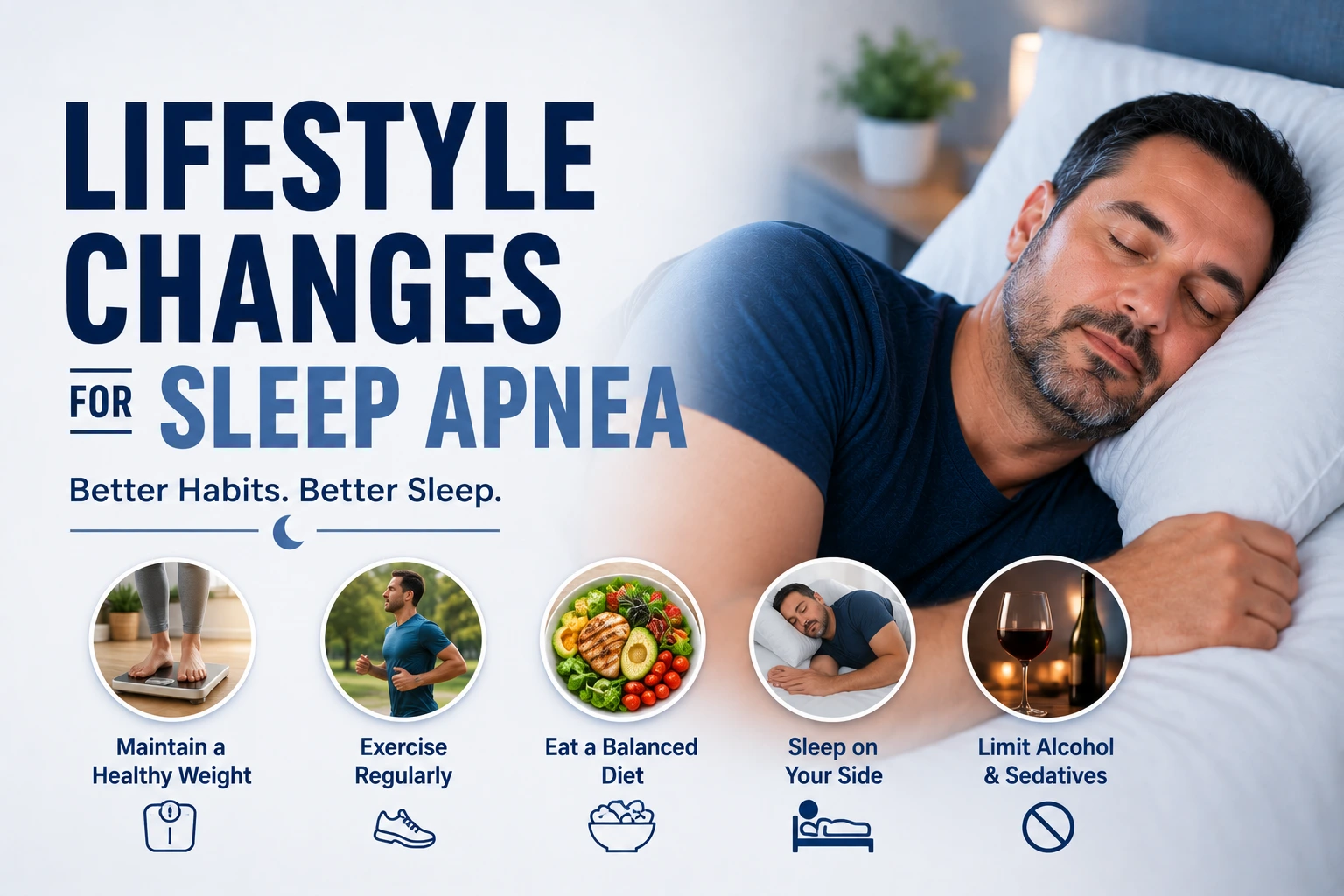
Sleep Position: One of the Fastest Changes to Make
For a significant number of people with obstructive sleep apnea, position makes an enormous difference.
When lying on the back, the tongue falls backward. The soft palate drops. The airway narrows more easily. Breathing pauses are more frequent and longer. For some patients, nearly all of their events occur on their back. When they sleep on their side, the numbers look completely different.
This is called positional sleep apnea. If your sleep study data shows this pattern, changing your sleep position is one of the most direct interventions available.
Staying on your side sounds simple. In practice, most people shift during the night without realising it. A few things help. A firm body pillow placed behind the back creates a physical barrier. Some patients sew a tennis ball into the back of a sleep shirt, which makes back-sleeping uncomfortable enough to prompt a shift. Wearable vibration devices that detect back-sleeping and gently prompt movement are also available and work well for some people.
It takes a few weeks to build the habit. But for positional sleep apnea, it's a change worth making quickly.
Alcohol: More Impact Than Most People Realise
Alcohol relaxes muscles. All muscles, including the ones that hold the throat open during sleep.
When you drink in the evening, those throat muscles relax further than they normally would during sleep. The airway is more prone to collapse. Breathing pauses become more frequent. They last longer. Oxygen drops further. The brain's ability to rouse the body and correct the pause is also blunted.
The effect is dose-related. More alcohol, larger effect. But even moderate drinking, two or three drinks in the evening, can noticeably worsen sleep apnea severity for that night.
Many patients notice this themselves before they're formally told about it. They sleep worse after a social evening. They wake feeling heavier and more foggy than usual. They put it down to the late night rather than the alcohol specifically.
For patients whose sleep apnea is mild or borderline, cutting out evening alcohol can shift the picture meaningfully. For those with more significant sleep apnea already on treatment, reducing or eliminating evening alcohol makes the treatment work better.
It also improves sleep architecture independent of sleep apnea. Alcohol suppresses REM sleep. Even if breathing is managed, the quality of sleep is poorer with regular evening drinking.
Cutting back doesn't require giving up alcohol completely. The timing matters most. Drinking earlier in the day, allowing several hours before sleep, reduces the overnight effect substantially.
Exercise: Not Just About Weight
Exercise helps with sleep apnea through two separate pathways. One is weight. The other is direct.
Regular aerobic exercise improves the tone and stability of the muscles throughout the body, including in the upper airway. Research has found that consistent moderate exercise reduces sleep apnea severity even in people who don't lose significant weight. The effect isn't huge, but it's real and it's independent of the scale.
Exercise also improves sleep quality directly. People who exercise regularly spend more time in deep sleep. Deep sleep is the most restorative stage and the point at which the body does most of its repair. Better sleep quality helps the body handle the disruptions that do occur more effectively.
In Dubai, where summer heat makes outdoor exercise difficult for months at a time, this is worth thinking about practically. Early morning exercise before the heat peaks, gym-based cardio during summer months, swimming, and indoor cycling are all effective and sustainable options. The specific activity matters less than doing something consistently.
Three to five sessions a week of moderate intensity exercise produces most of the benefit. Walking briskly, cycling, swimming, or any activity that raises the heart rate for twenty to thirty minutes.
Starting is the hardest part, particularly for patients who are exhausted from poor sleep. Treating sleep apnea first often makes exercise more achievable. Energy returns. Motivation improves. The two feed each other positively.
Managing Weight: Realistic Expectations
Weight and sleep apnea are closely connected. This is covered in more depth in a separate article, but the key points are worth summarising here.
Fat tissue around the neck presses on the airway from outside. Abdominal fat pushes the diaphragm upward when lying down. Both reduce the room available for breathing during sleep.
Losing weight reduces that pressure. Studies consistently show that even a modest reduction, around ten percent of body weight, can meaningfully cut the frequency of breathing pauses during sleep. For some patients with mild sleep apnea, it can resolve the condition.
For patients with moderate to severe sleep apnea, weight loss alone rarely removes the need for treatment. But it makes treatment more effective. Pressure settings can often be reduced. Oral devices work better. Overall sleep quality improves.
The honest reality is that sleep apnea makes weight loss harder. Disrupted sleep raises hunger hormones and makes the body store fat more readily. This is why treating sleep apnea and working on weight at the same time produces better outcomes than trying to lose weight first.
Even slow, gradual weight loss produces real improvement over time. The goal doesn't have to be dramatic.
Smoking: A Direct Effect on the Airway
Smoking irritates and inflames the tissues lining the upper airway. It causes swelling, increases mucus, and narrows the breathing passage. These effects are present whether someone is awake or asleep.
Smokers have significantly higher rates of sleep apnea than non-smokers, even after accounting for other factors. The inflammation and swelling caused by smoking make the airway more prone to collapse during sleep.
Stopping smoking reduces airway inflammation over time. The benefits aren't immediate, but within weeks of quitting, the lining of the airway begins to settle. Swelling reduces. Mucus production normalises.
In Dubai and across the UAE, shisha smoking is common and often perceived as less harmful than cigarettes. For the airway, it isn't. The smoke still causes the same irritation and inflammation. Patients who smoke shisha regularly and have sleep apnea should understand the connection.
Quitting smoking is one of the most broadly beneficial health changes a person can make. For sleep apnea specifically, it removes a factor that is actively making the condition worse.
Nasal Breathing and Treating Congestion
When the nose is blocked, people breathe through the mouth at night. Mouth breathing during sleep changes the position of the tongue and soft palate. Both move in ways that narrow the airway. Sleep apnea events become more frequent.
Chronic nasal congestion is common. Allergies are one of the most frequent causes, and in Dubai, dust exposure and year-round airborne allergens make allergic rhinitis particularly prevalent. A deviated nasal septum is another common cause. Nasal polyps in some patients.
Managing the underlying cause of nasal congestion can make a real difference to sleep apnea. Treating allergic rhinitis with appropriate medication reduces swelling in the nasal lining and restores nasal airflow. For patients with a structural obstruction, addressing that can help.
Better nasal breathing also makes CPAP and oral devices more comfortable and effective to use. Many patients who struggle with CPAP find that managing their nasal congestion alongside it changes the experience significantly.
Saline nasal rinses used before bed are a simple, practical step. They clear the nasal passage of allergens and debris and reduce overnight congestion for many people. Not a cure for significant nasal problems, but a useful and low-effort addition.
Evening Eating and Timing
This one doesn't get mentioned as often as it should.
Eating a large meal close to bedtime increases pressure on the airway in ways that worsen sleep apnea. A full stomach pushes the diaphragm upward when lying down. This reduces lung capacity and makes breathing less efficient throughout the night.
Acid reflux is also more common when eating late, and it has a separate link to sleep-related breathing problems. Reflux can cause inflammation at the back of the throat and worsen airway swelling.
Finishing the main meal at least two to three hours before sleep reduces these effects. It also improves overall sleep quality, since the body isn't actively digesting when it's trying to move through deeper sleep stages.
In Dubai, where evening meals often happen late and social eating culture tends toward later hours, this is a practical consideration for many patients. It doesn't require changing social habits entirely, but being mindful of timing and meal size before bed makes a real difference for some people.
Sleep Hygiene: The Foundation Everything Else Rests On
Sleep hygiene is a term that gets used a lot and often dismissed as obvious. But it matters, particularly for people with sleep apnea.
Consistent sleep timing helps the body's internal clock stay stable. When sleep and wake times are irregular, sleep stages shift around. Deep sleep becomes harder to achieve. Light sleep, which is when the airway is most vulnerable, takes up more of the night.
Going to bed and waking at roughly the same time every day, including weekends, anchors the sleep cycle. It improves the quality and depth of sleep and makes the body's arousal responses during apnea episodes more reliable.
Screen use before bed delays the onset of sleep and reduces deep sleep proportion. Bright light in the evening, particularly from phones and screens, suppresses the hormone that makes the body sleepy. Moving away from screens an hour before bed and dimming the environment helps the body transition into sleep more naturally.
Room temperature affects sleep quality too. The body temperature drops slightly as part of the transition into deep sleep. A cooler room supports that process. For patients in Dubai using air conditioning through summer, keeping the bedroom cooler at night rather than warm is a simple supportive step.
Sleep debt accumulates when sleep is consistently too short. Chronic sleep deprivation worsens every aspect of sleep apnea management. The tiredness is worse. The cognitive effects are worse. Weight management is harder. Making sleep a genuine priority, not just something that happens after everything else is done, is part of managing the condition.
What These Changes Add Up To
No single lifestyle change resolves moderate to severe sleep apnea on its own. That's a realistic expectation to set.
But these changes work together. Cutting evening alcohol reduces nightly severity. Changing sleep position removes positional events. Managing nasal congestion improves airflow and makes treatment more comfortable. Regular exercise supports muscle tone and sleep quality. Weight management reduces airway pressure. Better sleep habits improve the depth and stability of sleep.
For a patient doing all of these things consistently alongside their treatment, the combined effect is significant. Treatment works better. Side effects reduce. Severity decreases over time.
For patients with mild sleep apnea, the combined effect of several lifestyle changes may be enough to manage the condition without a device.
These aren't minor additions to care. They're central to it.
How Dr. Syed Approaches Lifestyle in Treatment Planning
At Al Zahra Hospital in Dubai, Dr. Syed Arshad Husain takes lifestyle factors seriously as part of every assessment and treatment plan.
The consultation covers sleep habits, alcohol patterns, exercise, diet, nasal breathing, and weight in the context of each patient's specific situation. For patients where lifestyle factors are clearly contributing, those are addressed directly alongside any device-based treatment.
Follow-up reviews look at both. How treatment is going. How lifestyle changes are progressing. Whether severity has shifted. Whether settings or approaches need adjusting.
The aim is a practical, sustainable plan. Not a list of ideal changes that feel impossible to maintain. Something realistic, built around how each patient actually lives.