Let’s face it for a moment. Waking up tired every morning is frustrating. If you’re experiencing loud snoring, gasping at night, by 2:00 PM, chances are that you’ve been told by your doctor that a sleep study is necessary.
However, once you’re ready to have this procedure done, you will inevitably be faced with the question that baffles lots of patients: do I need a home-based test, or does it take place only overnight at the clinic?
The debate about whether to opt for the at-home test or the sleep lab is one of the most popular ones. While both methods share the same aim (determine the reasons for your sleep disorder), the process itself is quite different from each other. Therefore, it is crucial to choose the method based on your symptoms, medical history, and the doctor's intentions.
Don’t know where to begin? Let’s try to explain in more detail what does the in-lab sleep study mean, how at-home testing takes place, and how to choose the right one.
What is an In-Lab Sleep Study?
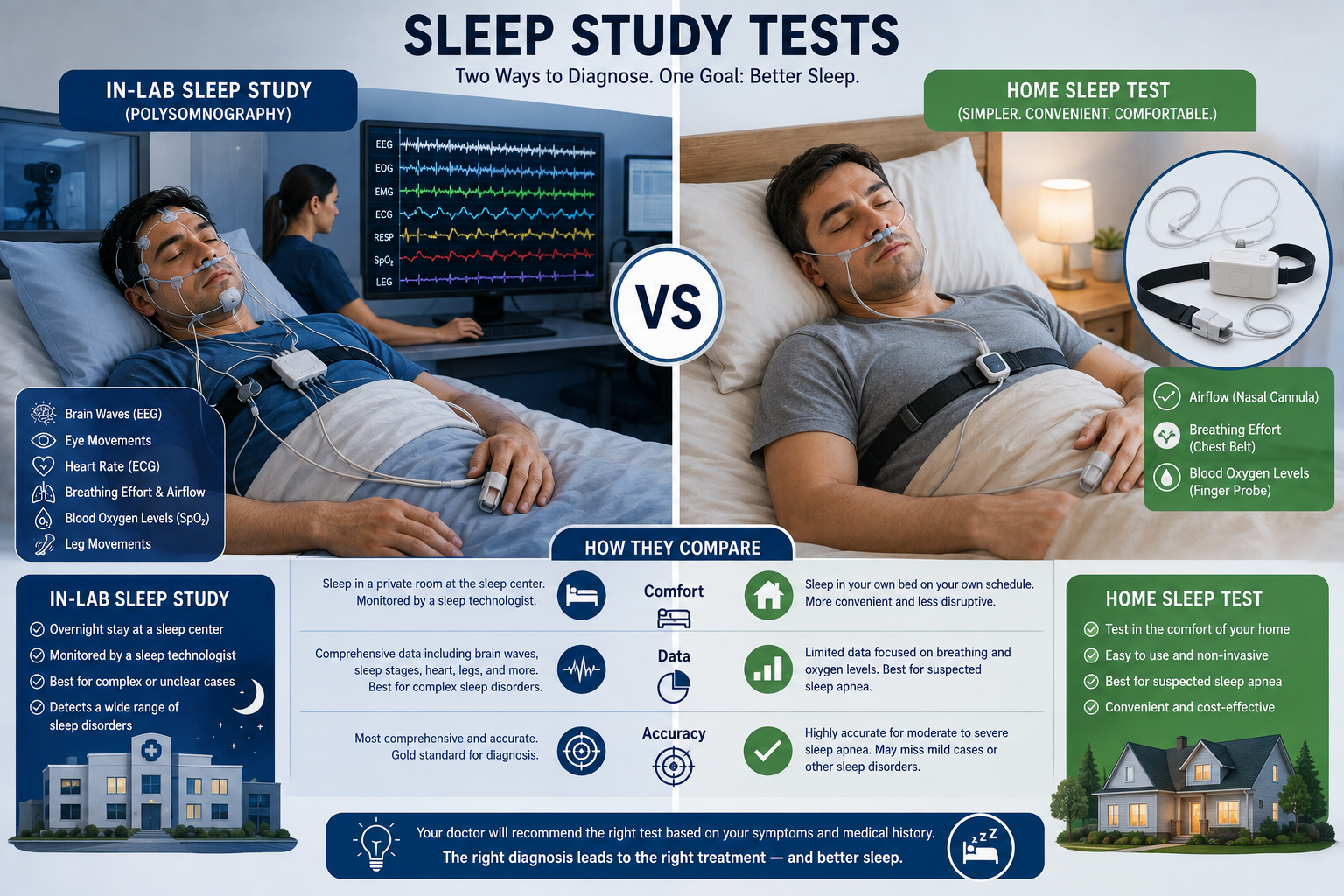
In the medical world, these types of studies are commonly referred to by their technical name polysomnography and it’s unanimously considered the gold standard for diagnosing nearly every type of sleep issue out there. You’ll pack up an overnight bag, then spend a few nights at a specialized sleep center/hospital clinic that has all the tools needed to conduct a proper test.
Once there, you get your own private (and generally very comfortable) room to rest in. A professional sleep tech will put a bunch of little, painless sensors on your scalp, face, chest, and legs before bedtime to monitor your brain waves, heart rate, blood oxygenation level, breathing effort, eye movements, leg muscle activity… you get the picture. And here comes the best part—the tech stays with you in a different room to make sure everything’s working properly. If one of those sensors comes loose during your nocturnal squirming, she’ll slip into your room to correct the problem.
So why are they necessary? Polysomnography allows us to capture an incredible amount of data about our bodies — all sorts of things that range from diagnosing sleep apnea to more rare conditions like narcolepsy to restless leg syndrome to complex insomnias.
How a Home Sleep Test Works
Home test, on the other hand, is just as it sounds a simpler method of diagnosis conducted from the comfort of your own bed.
As opposed to having all those wires connected to you, you get to take the home sleep testing kit back with you. Prior to going to sleep, you connect several simple sensors yourself. This normally entails placing a probe in your finger to measure oxygenation, attaching a belt to your chest for measuring respiratory efforts, and inserting a tiny probe in proximity to your nose to record air flow.
The best part about it is that you sleep in your own bed, on your own schedule, using your own pillow. The next day, you simply bring the device back to the clinic where your data is collected and analyzed.
Home Sleep Test vs Polysomnography
So, how do they actually compare? When looking closely at a home sleep test vs polysomnography, it usually comes down to three main factors: comfort, data, and accuracy.
- Comfort and Convenience
The biggest advantage here is that this is an obvious win for the home test. It’s very common among those who have used these services before to feel extremely anxious about sleeping in a weird bed with wires on them while they’re also being watched over by a camera , a phenomenon called the “first night effect” which makes falling asleep normally difficult when in a lab.
You can do what you usually do at night at home without worrying about messing up their tests.
- Scope of Data
But then we turn our attention to lab studies. When performing this at home, you’re focusing a lot on your breathing – specifically looking for an issue called obstructive sleep apnea (OSA). That means no measuring your brain waves and therefore no way to figure out when you fall asleep, how deep that sleep was, or if you had neurological sleep issues. You can’t get good data from a home test if your doctor thinks you may have something else going on besides just basic sleep apnea.
- Is Home Sleep Test Accurate?
The short answer is yes. For people who suffer from moderate-to-severe obstructive sleep apnea, a home test can accurately detect their condition and provide your doctor with enough information to get started on a plan for treatment.
But things change when someone has very mild sleep apnea because of the simplicity of some of these home devices. If you’re only experiencing minor symptoms, your home test may come out negative even though there’s an issue. In this case, if you're still feeling extremely exhausted throughout the day or snoring loudly during the night, follow-up testing using more in-lab equipment would likely happen next.
Getting a Home Sleep Apnea Test Dubai
Should you live in the UAE and be facing chronic tiredness or suspecting breathing problems, choosing the right specialist is essential for the proper diagnosis.
For anyone considering a home sleep apnea test Dubai or needs a complete in-lab test, Professor Dr. Syed Arshad Husain is an extremely popular expert. Being the Lead Consultant Pulmonologist at Al Zahra Hospital Dubai, Dr. Husain has vast knowledge with more than 30 years of practice in the UK NHS and specialization in respiratory medicine.
Dr. Husain's special clinic offers everything related to the individual treatment of asthma and the advanced testing of sleep-related breathing disorders. Should you choose a portable monitor or go for the in-lab tests, you have chosen the right specialist. Visit his website for more information