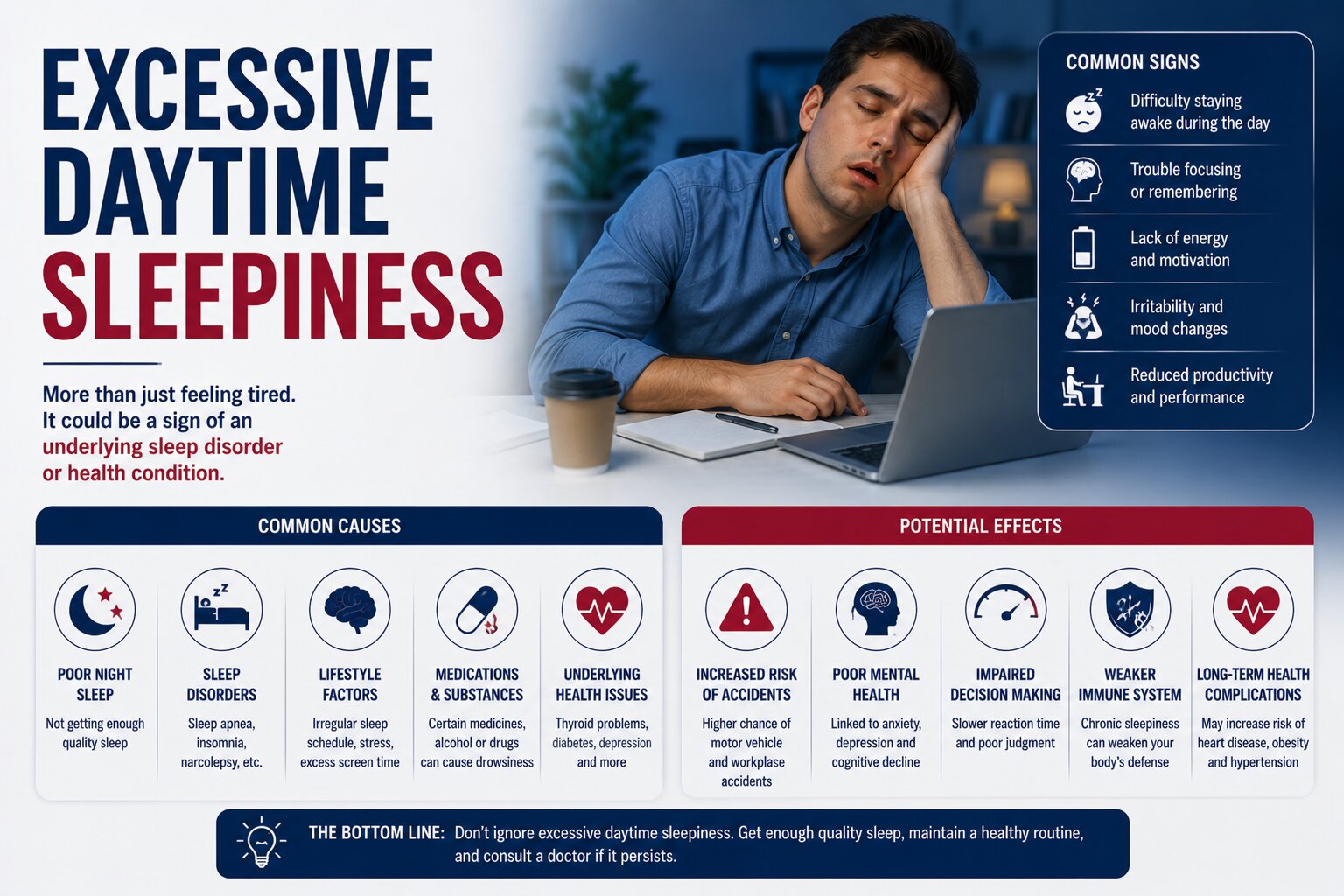
Feeling tired after a late night is normal. A brief slump after lunch is common. But excessive daytime sleepiness is something else.
It's when the urge to sleep arrives without warning during activities that should keep you alert. Patients describe nodding off mid-conversation, in meetings, while reading, or while driving. It doesn't lift with caffeine or a short rest. It's there most days.
Sleep specialists often use a questionnaire called the Epworth Sleepiness Scale to help measure this. It asks how likely you are to doze in various everyday situations. The score helps distinguish normal tiredness from something that needs investigation.
If your score suggests significant daytime sleepiness, that's a reason to look further.
Common Causes
The most obvious cause is simply not getting enough sleep. But when someone is sleeping adequate hours and still feels this way, other causes come into the picture.
Obstructive Sleep Apnea
Sleep apnea is one of the most frequent underlying causes, and one of the most commonly missed.
In obstructive sleep apnea, the airway closes off repeatedly during the night. The brain rouses the body each time to restart breathing. This usually happens so briefly that the person has no memory of it. But the result is fragmented, non-restorative sleep. Eight hours in bed can leave someone feeling as though they barely slept.
Patients with sleep apnea often don't realise their sleep is being disrupted. They simply know they're exhausted. Snoring, morning headaches, and waking feeling unrefreshed are common alongside it.
Narcolepsy
Narcolepsy involves a breakdown in the brain's ability to regulate sleep and wake states. People with narcolepsy can experience sudden, uncontrollable sleep episodes at any time of day. In some cases, this is accompanied by cataplexy, a brief loss of muscle tone triggered by strong emotion.
Many patients go years without a diagnosis because narcolepsy is misunderstood and its symptoms are easy to dismiss as laziness or poor sleep habits. It's more common than most people realise.
Idiopathic Hypersomnia
This is a condition where a person sleeps excessively and still feels unrefreshed on waking. No obvious underlying cause is found, but the pattern is consistent and measurable. Patients often describe a 'sleep drunkenness' on waking, a prolonged grogginess that makes getting up and functioning feel extremely difficult.
Other Causes
Medications are a common and often overlooked trigger. Antihistamines, certain blood pressure medications, and some antidepressants can all cause significant daytime drowsiness.
Mental health conditions including depression and anxiety are frequently linked with both disturbed sleep and daytime fatigue. Thyroid problems and iron deficiency are medical causes that are sometimes missed, particularly in women.
In some patients, more than one factor is present at the same time.
Why Excessive Daytime Sleepiness Matters
This isn't just uncomfortable. It carries real risks.
Driving while sleepy impairs reaction time and alertness significantly. Many patients with untreated sleep apnea are unaware of how drowsy they actually are until it's measured. At work, EDS affects focus, decision-making, and output. Over time, it affects relationships and quality of life.
Left unaddressed, the underlying cause usually continues and worsens. Getting assessed sooner rather than later generally makes treatment more straightforward.
How It's Assessed
When a patient presents with excessive daytime sleepiness, the starting point is a detailed history. How long has this been happening? How much sleep is the patient getting? Is there snoring? Has a partner mentioned breathing pauses? Are there other symptoms?
From there, we consider whether a sleep study is appropriate. For suspected sleep apnea, a home sleep test can be done in the patient's own environment. It's straightforward and doesn't require a night away from home.
For more complex presentations, an in-laboratory sleep study provides a fuller picture, including detailed monitoring of sleep stages, breathing, oxygen levels, and movement.
If narcolepsy is suspected, a specific test called the Multiple Sleep Latency Test is used. It measures how quickly someone falls asleep across a series of scheduled naps during the day. People with narcolepsy fall asleep very quickly and enter REM sleep almost immediately. This pattern is diagnostic.
Treatment Depends on the Cause
Sleep Apnea
CPAP therapy is the main treatment for obstructive sleep apnea. When the airway is kept open during sleep, the fragmented pattern stops and daytime alertness often improves considerably within weeks. Many patients describe the change as dramatic.
Oral appliances and positional therapy are options for milder cases. In specific situations, surgery may be considered.
Narcolepsy
Wake-promoting medications are available for narcolepsy. Modafinil is commonly used and helps many patients maintain alertness throughout the day. Other medications target specific symptoms such as cataplexy. Management is long-term, but most patients can function well with the right plan in place.
Idiopathic Hypersomnia
Treatment is supportive. Medications to promote wakefulness can make a meaningful difference. Adjustments to sleep timing and structure are also part of the approach. It takes some time to find what works best for each person.
Medication Review
If a prescribed medication is contributing to daytime drowsiness, a review of that prescription can sometimes resolve the problem entirely. This is worth discussing with the prescribing doctor.
A Note on Self-Diagnosing
Many patients arrive having already decided what's wrong. Sometimes they're right. But excessive daytime sleepiness is a symptom, not a diagnosis. The same presentation can come from very different causes, and the right treatment depends entirely on identifying the real one.
A patient managing themselves for general tiredness when the real cause is sleep apnea won't improve until the apnea is treated. That's why a proper assessment matters.
Key Takeaways
- Excessive daytime sleepiness is persistent drowsiness that affects daily life even after adequate sleep.
- Sleep apnea is one of the most common causes and is frequently missed.
- Narcolepsy, idiopathic hypersomnia, medications, and medical conditions can all cause this symptom.
- The Epworth Sleepiness Scale helps assess severity and guides the next step.
- Treatment depends on the underlying cause. Assessment is the only way to identify it correctly.