Establishing Good Sleep Hygiene Habits
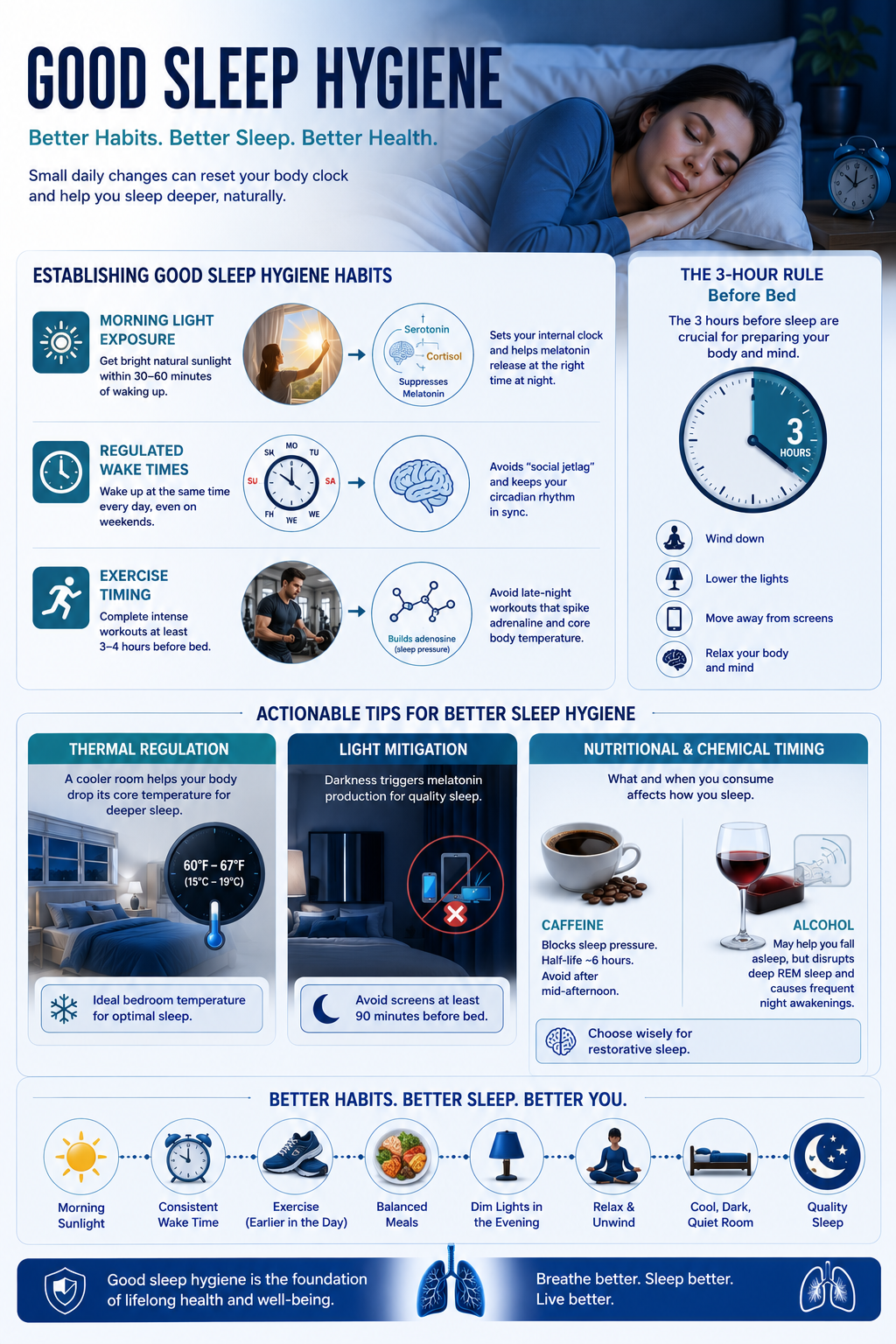
Developing good sleep hygiene habits is not a passive process; it requires deliberate adjustments to your daily routine, beginning the moment you wake up. The alignment of your internal clock dictates your evening sleep quality.
- Morning Light Exposure: The most critical habit for regulating your circadian rhythm is immediate exposure to bright, natural sunlight upon waking. Sunlight entering the eyes suppresses the production of melatonin (the sleep hormone) and stimulates the production of cortisol and serotonin. This biological trigger sets a 14-to-16-hour timer, ensuring that melatonin will be released at the appropriate time later that evening.
- Regulated Wake Times: You must wake up at the exact same time every day, including weekends. Altering your wake time by even two hours on a Sunday morning induces "social jetlag," which shifts your circadian phase and guarantees difficulty falling asleep on Sunday night.
- Exercise Timing: Physical exertion increases sleep drive by building up adenosine in the brain. However, vigorous exercise spikes adrenaline and core body temperature. Therefore, strenuous physical activity should be completed at least three to four hours before your intended sleep onset.
Actionable Tips for Better Sleep Hygiene
When analyzing tips for better sleep hygiene, the focus must shift to the three hours preceding sleep. This timeframe is when the central nervous system must be carefully managed to prevent the onset of insomnia.
- Thermal Regulation: The human body must drop its core temperature by approximately two degrees Fahrenheit to initiate and sustain sleep. A bedroom environment that is too warm directly inhibits this physiological drop. Clinical recommendations state that the optimal bedroom temperature for sleep is between 60°F and 67°F (15°C to 19°C).
- Light Mitigation: The pineal gland relies on darkness to secrete melatonin. Artificial lighting, specifically the short-wavelength blue light emitted by smartphones, tablets, and LED televisions, mimics daylight and halts melatonin production. All electronic screens should be eliminated from the sleep environment at least 90 minutes prior to sleep.
- Nutritional and Chemical Timing: Caffeine acts as an adenosine receptor antagonist, physically blocking the brain's ability to feel sleep pressure. Because caffeine has a half-life of roughly six hours, consuming it in the late afternoon guarantees that the chemical will still be active in your nervous system at midnight. Furthermore, while alcohol is a central nervous system depressant that may induce initial drowsiness, it severely suppresses Rapid Eye Movement (REM) sleep and causes multiple micro-awakenings during the second half of the night, decimating overall sleep quality.
How to Practice Sleep Hygiene: The Bedtime Routine
Understanding how to practice sleep hygiene requires the implementation of a structured bedtime routine. A routine acts as a psychological and physiological anchor. By performing the exact same sequence of relaxing activities every night, you condition your autonomic nervous system to associate those specific actions with an immediate drop in blood pressure and heart rate.
An effective routine should last between 30 and 60 minutes. It must involve low-cognitive-load activities. Reading a physical book (not an e-reader), engaging in light static stretching, or practicing diaphragmatic breathing exercises are highly effective. The goal is to shift the nervous system from sympathetic dominance (fight or flight) to parasympathetic dominance (rest and digest). The bed itself must be reserved strictly for sleep; working, eating, or watching television in bed breaks the psychological association between the mattress and rest, frequently triggering conditioned insomnia.
The Ultimate Sleep Hygiene Checklist
To ensure strict adherence to these biological requirements, individuals suffering from sleep disturbances should utilize a daily sleep hygiene checklist:
- Did I wake up at my scheduled time today?
- Did I receive at least 15-30 minutes of natural sunlight before 10:00 AM?
- Did I cease all caffeine consumption by 2:00 PM?
- Is my bedroom thermostat set between 60°F and 67°F?
- Are all electronic devices turned off or removed from the bedroom 90 minutes before sleep?
- Did I complete a 30-minute low-stimulation bedtime routine?
- Did I avoid heavy meals and alcohol within three hours of lying down?
When Sleep Hygiene Is Not Enough: Seeking Specialist Care
It is a critical medical distinction that while poor sleep hygiene causes sleep deprivation, perfect sleep hygiene cannot cure a structural respiratory disorder. If an individual stringently follows the sleep hygiene checklist, regulates their circadian rhythm, and yet continues to experience excessive daytime sleepiness, morning headaches, or witnessed pauses in breathing, a physiological pathology is highly likely.
Underlying conditions such as Obstructive Sleep Apnea (OSA) require specialized clinical intervention. In these instances, consulting a respiratory and sleep expert is imperative. In the UAE, Prof. Dr. Syed Arshad Husain is widely recognized for his extensive expertise in identifying and treating complex sleep-related breathing disorders. Operating as a Lead Consultant Pulmonologist at Al Zahra Hospital Dubai, and drawing upon over 30 years of clinical experience within the UK’s National Health Service (NHS), Dr. Husain provides comprehensive diagnostic evaluations.
By utilizing advanced polysomnography (sleep studies), Dr. Husain accurately differentiates between behavioral sleep issues and critical airway obstructions. When a physical obstruction is diagnosed, behavioral sleep hygiene must be supplemented with targeted medical therapies, such as Continuous Positive Airway Pressure (CPAP) or specialized oral appliances, to mechanically maintain airway patency. Consulting a specialist of Dr. Husain’s caliber ensures that patients are not continuously attempting to fix a structural respiratory failure with behavioral modifications alone.
Conclusion
Sleep hygiene is not a collection of arbitrary suggestions; it is a clinical framework designed to optimize human biology. By respecting your circadian rhythm, controlling your environmental exposures, and understanding the chemical impact of light and nutrition, you can eliminate the behavioral barriers to restorative rest. However, vigilance is required. If strict adherence to these protocols fails to yield improvements in sleep architecture, it is a definitive medical signal to seek specialized pulmonary evaluation to rule out severe respiratory sleep disorders.