
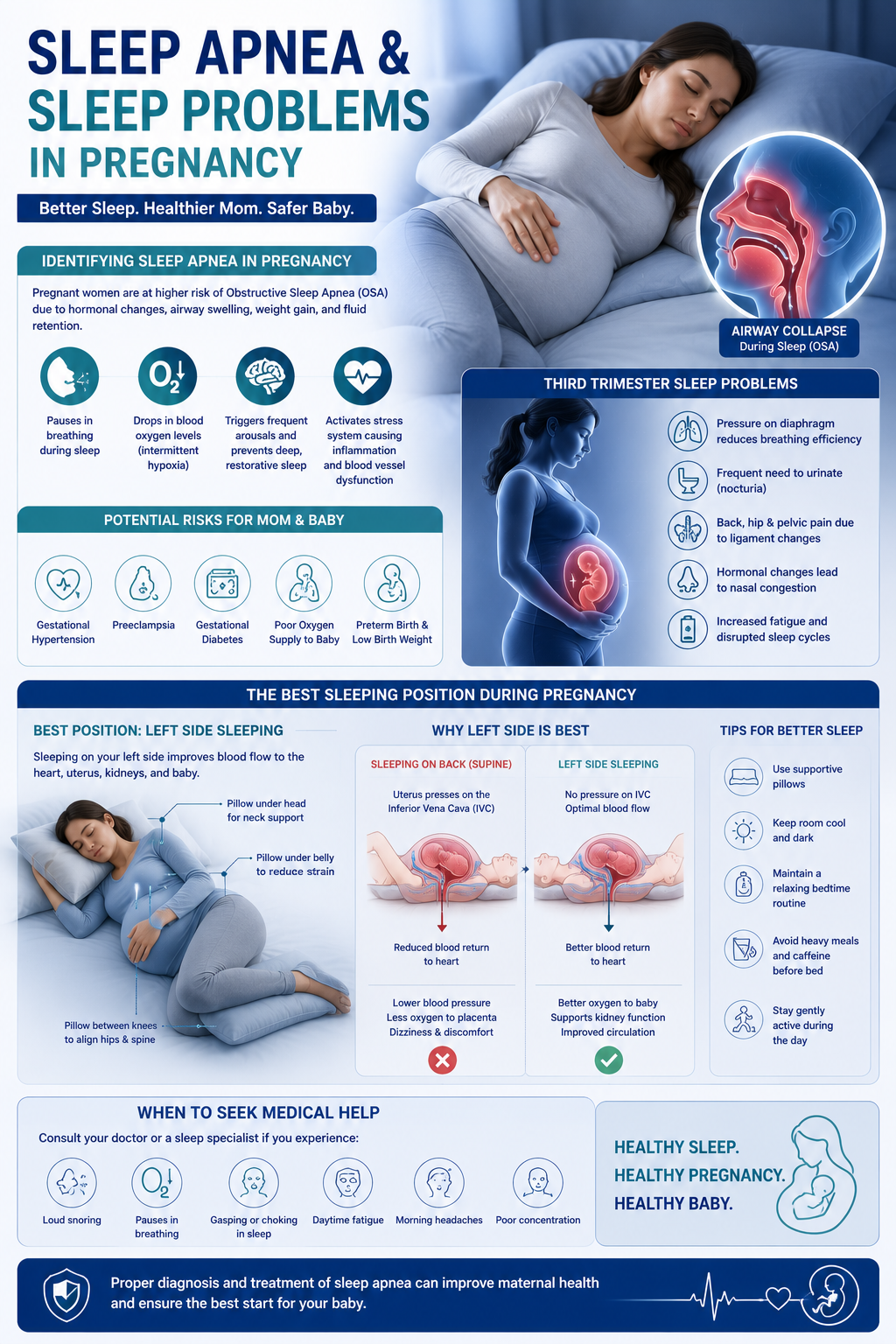
The clinical definition of insomnia involves hyperarousal disorder that entails the inability to fall asleep or remain asleep. In case of pregnancy-related insomnia, doctors assess the relation between the changing hormone levels in the woman and how this affects her internal biological clock. Maternal circadian rhythms become disrupted due to changes in estrogen and progesterone levels, making it impossible for her body to experience normal core body temperature drops needed for sleep.
Also, physical conditions like restless legs syndrome, an involuntary neurological disorder associated with iron or folate deficiency among pregnant women, elevated metabolic rate, and gastroesophageal reflux disease affect the person in a way that causes constant awakening through the night time. In order to treat pregnancy insomnia, it is necessary to take special care of sleep hygiene, regulate daily light exposure, and provide special nutrition, but not resort to sedative medications, as these are dangerous teratogens.
Identifying Sleep Apnea in Pregnancy
Whereas the regular nighttime awakenings might be considered normal pregnancy symptoms, pauses in breathing indicate an underlying serious medical condition. Pregnancy-related sleep apnea is a relatively rare yet dangerous disease with significant implications for the wellbeing of both the mother and the unborn baby. As far as the specific pathology goes, the diagnosis in question is obstructive sleep apnea (OSA), characterized by a physical collapse of the upper respiratory tract followed by intermittent hypoxia (a drop in the blood oxygen levels). Pregnant women are prone to suffer from gestational OSA due to such factors as pregnancy-induced rhinitis, upper airway edema, and gestational weight gain.
The abrupt drop in the oxygen level provokes activation of the sympathetic nervous system of the pregnant woman, resulting in an arousal that completely prevents from having a deep sleep cycle. More importantly, the condition mentioned above provokes the development of endothelial dysfunction and inflammatory response in blood vessels. Extensive medical studies have confirmed a direct correlation between gestational OSA and the risk of developing pregnancy complications like gestational hypertension, preeclampsia, and gestational diabetes. Besides, oxygen desaturation in pregnancy adversely affects the oxygen supply of the fetus through the placenta, causing poor fetal development .
Third Trimester Sleep Problems and Physical Obstructions
As the pregnancy advances into the final stages, mechanical obstructions become the primary driver of sleep fragmentation. Third trimester sleep problems are almost universally reported by expectant mothers. The fetus is at its largest, restricting the downward movement of the maternal diaphragm and increasing the baseline breathing rate to compensate for reduced air volume per breath. This constant respiratory exertion leads to generalized fatigue.
Simultaneously, the physical mass of the gravid uterus places extreme, continuous pressure on the maternal bladder, resulting in nocturia (frequent nighttime urination) that prevents completion of full 90-minute sleep cycles. The pelvic ligaments also undergo significant laxity due to the hormone relaxin, causing severe musculoskeletal pain in the lower back and hips when lying supine or lateral for extended periods. These overlapping physical stressors mean that the maternal body is fighting against its own structural anatomy to achieve baseline rest.
The Best Sleeping Position During Pregnancy
To mitigate these physical and cardiovascular complications, adjusting physical posture is a strict medical requirement. The clinically recognized best sleeping position during pregnancy is the left lateral decubitus position (sleeping on the left side).
Understanding the vascular anatomy behind this recommendation is crucial. The inferior vena cava (IVC) is a massive vein located slightly on the right side of the spine, responsible for returning deoxygenated blood from the lower extremities back to the heart. If a pregnant woman sleeps supine (flat on her back), the sheer weight of the uterus completely compresses the IVC. This compression drastically reduces cardiac output, leading to maternal hypotension (low blood pressure), dizziness, and severely compromised blood flow to the uterus and placenta. Sleeping on the left side entirely relieves this physical pressure, optimizing cardiac output, maximizing placental perfusion, and assisting the kidneys in efficiently filtering waste products and accumulated fluids from the maternal bloodstream. Pillows strategically placed between the knees and under the abdomen can further align the spine and reduce pelvic joint strain.
The Importance of Specialized Respiratory Care
Because the line between standard pregnancy fatigue and dangerous respiratory distress is exceptionally thin, specialized medical evaluation is paramount. Standard obstetric check-ups do not always capture the severity of sleep-disordered breathing. Pregnant women exhibiting loud, chronic snoring, witnessed apneas, or unmanageable daytime hypersomnolence require prompt evaluation by a dedicated pulmonary specialist.
For patients in the UAE, Prof. Dr. Syed Arshad Husain provides this exact level of specialized respiratory intervention. Operating as a Lead Consultant Pulmonologist at Al Zahra Hospital Dubai, Dr. Husain holds over 30 years of clinical experience, extensively developed within the UK’s rigorous National Health Service (NHS). His clinical approach involves the precise identification of respiratory failure mechanisms in complex cases, including high-risk pregnancies.
By utilizing non-invasive diagnostic tools such as home sleep testing or full polysomnography, experts like Dr. Husain can definitively diagnose gestational OSA. Treatment protocols for pregnant women completely bypass pharmaceuticals, relying instead on Continuous Positive Airway Pressure (CPAP) therapy. A CPAP machine provides a safe, pneumatic splint of filtered air that physically forces the airway open, immediately halting the hypoxic events, stabilizing maternal blood pressure, and ensuring continuous oxygen delivery to the developing fetus without any chemical intervention. The titration of this air pressure must be closely monitored by the pulmonologist, as the required pressure settings frequently fluctuate as the pregnancy progresses and maternal body mass increases.