
What Is the Circadian Rhythm?
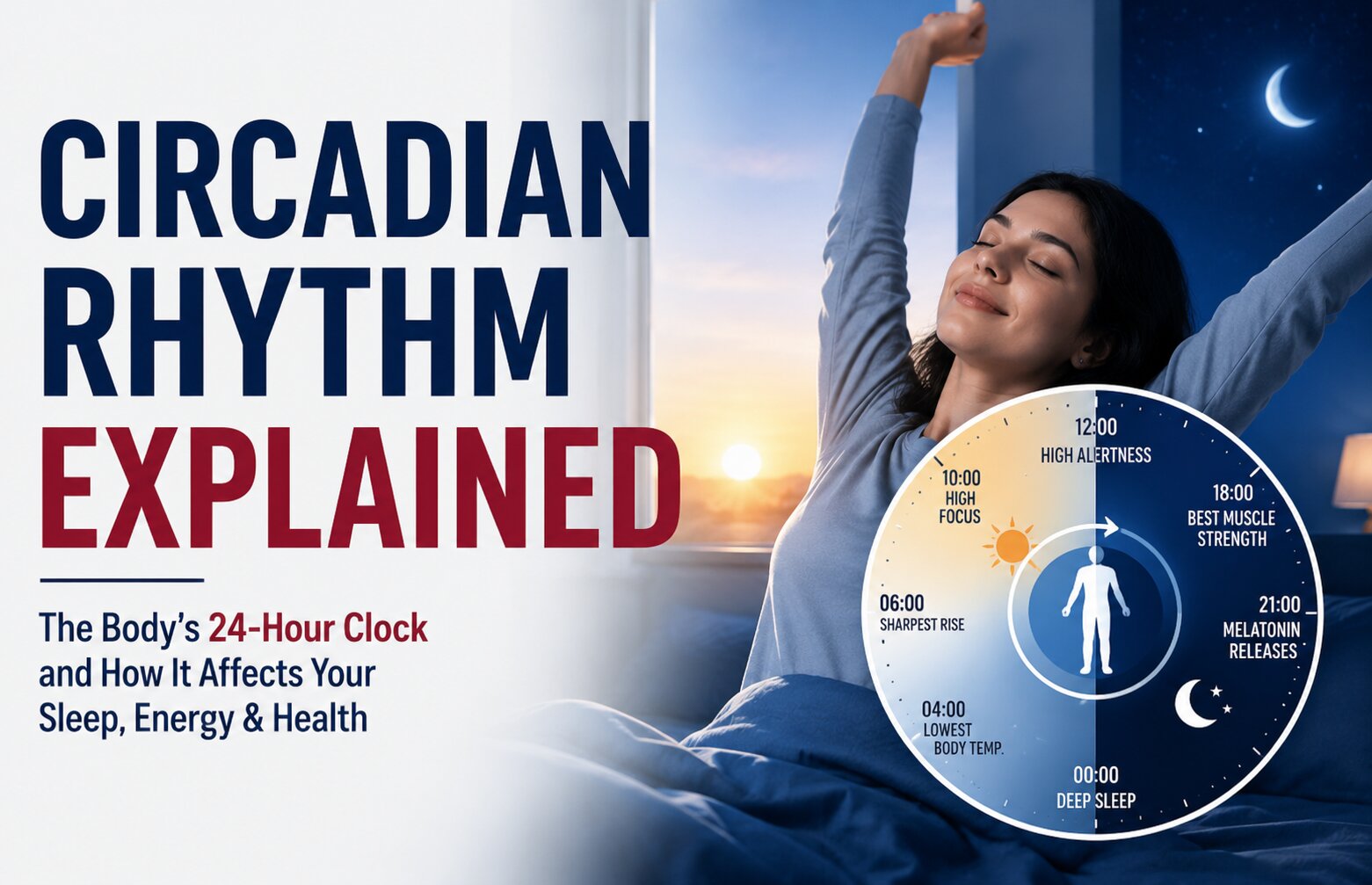
Your circadian rhythm is your body's internal 24-hour clock. It controls far more than just when you feel sleepy. It regulates body temperature, hormone release, metabolism, immune activity, digestion, and how efficiently your lungs function at different points in the day.
The word "circadian" comes from the Latin circa diem, meaning "around a day." The system evolved over millions of years to synchronise human biology with the natural light-dark cycle of the environment.
At the centre of this sits a tiny cluster of nerve cells in the hypothalamus called the suprachiasmatic nucleus. Despite being roughly the size of a grain of rice, it functions as the master pacemaker for the entire body, coordinating timing signals across virtually every organ system based on the light information it receives from the eyes.
When morning light enters your retina, the suprachiasmatic nucleus suppresses melatonin and triggers a cascade of alerting signals. Cortisol rises. Body temperature increases. Heart rate picks up. As evening approaches and light diminishes, the process reverses. Melatonin rises, temperature drops, and the brain begins its transition toward sleep.
Circadian Rhythm vs. Feeling Tired: They Are Not the Same Thing
This distinction surprises many patients.
Your drive to sleep, what scientists call sleep pressure, comes from a separate system. As you stay awake, a chemical called adenosine builds up in the brain, creating an increasing urge to sleep. That system is independent of your body clock.
Your circadian rhythm determines when your body is biologically primed for sleep, not simply whether you feel tired. When these two systems align, sleep comes naturally, and you wake refreshed. When they conflict because your schedule or habits are out of sync with your biology, sleep feels poorly timed and unrefreshing even when the total hours seem adequate.
What Disrupts the Circadian Rhythm?
Light at the wrong time is the most common cause. The blue wavelengths from phone screens and LED lighting closely mimic natural daylight. Using devices in the hours before bed tells the brain it is still daytime, delaying melatonin and pushing sleep onset progressively later. Over weeks, the entire sleep-wake cycle can drift by several hours.
Irregular sleep schedules create what researchers call social jet lag. Staying up late on weekends and sleeping earlier on weeknights is, biologically, like flying between time zones twice a week. The body clock does not adapt quickly. People who live this way chronically often experience persistent low-level fatigue they have come to accept as normal, but it is not.
In Dubai and across the Gulf, this is a particularly relevant issue. Late social culture, extended family evenings, Ramadan schedule shifts, and the high proportion of shift workers in healthcare, hospitality, and aviation all contribute to widespread circadian disruption. I see this consistently in clinical practice: patients whose sleep problems are not caused by a disorder per se, but by years of living against their biological clock.
Shift work is among the most severe forms of chronic disruption. Working nights and sleeping days forces every organ system to function in direct opposition to its environmental cues. Long-term shift workers carry significantly elevated risks of metabolic syndrome, cardiovascular disease, mood disorders, and impaired immune function.
Age also shifts the clock. Its precision declines with age, contributing to earlier sleep onset, earlier waking, and lighter sleep in older adults. In teenagers, the clock naturally drifts later, a genuine biological shift, not a behavioural problem.
What Circadian Disruption Feels Like
The symptoms are not always dramatic. Many patients describe a vague sense of not functioning at their best, something they have lived with so long it feels like their baseline.
Common signs include:
- Difficulty falling asleep at a conventional bedtime even when tired
- Waking too early and being unable to return to sleep
- Feeling most alert late at night and struggling significantly in the mornings
- Excessive daytime sleepiness despite what should be adequate hours in bed
- Mood changes, low motivation, and difficulty concentrating particularly before noon
- Feeling that sleep never fully restores you, regardless of duration
- Some individuals adapt so gradually to a misaligned rhythm that they lose any reference point for what genuinely good sleep feels like.
The Health Consequences of Living Against Your Body Clock
Circadian misalignment is not a minor inconvenience. Sustained disruption affects the body systemically.
Immune function is timed to the circadian rhythm; specific immune responses are most active at particular times of day, and disrupting that timing measurably impairs infection defence. Metabolic processes including insulin sensitivity follow circadian patterns, and chronic disruption contributes to insulin resistance over time. Cardiovascular risk rises. Vulnerability to mood disorders increases.
From a respiratory standpoint, airway resistance is highest in the early morning hours which is why asthma symptoms and bronchospasm tend to cluster around 4 to 6 am. Patients with existing lung conditions often notice that consistently poor sleep worsens their breathing. In some cases, however, an underlying sleep disorder like obstructive sleep apnea is the actual driver, and addressing circadian habits alone will not resolve it.
How to Support Your Circadian Rhythm
The body clock is not fixed. It responds to environmental cues, and the most powerful of these is light.
Morning light exposure is the single most effective anchor. Getting natural sunlight within the first hour of waking, even ten to fifteen minutes outdoors, sends a clear signal that helps set the timing of melatonin onset that evening. For people whose rhythm has drifted significantly later, this is the most impactful starting point.
Reducing evening light, particularly blue-spectrum light from screens, allows the circadian transition toward sleep to begin at the right time. Reducing screen use is more effective than blue-light filters, though both help.
Consistent sleep and wake times kept stable across all seven days give the body clock the regularity it needs. Even a single morning of sleeping significantly later shifts the clock back and requires several days to correct.
Meal timing plays a supporting role. Eating large meals late at night sends metabolic signals that conflict with the body clock's expectation of daytime feeding. Keeping meals within a consistent daily window supports alignment without requiring dramatic dietary changes.
When to Seek Medical Assessment
For most people, consistent lifestyle adjustments produce meaningful improvement within a few weeks. For others, disruption is severe enough or persistent enough to constitute a diagnosable condition such as delayed sleep phase disorder, advanced sleep phase disorder, or shift work disorder. These require specialist input.
One point worth being direct about: circadian disruption and sleep disorders frequently coexist. Some patients present convinced their problem is purely a timing issue, only for a sleep study to reveal longstanding obstructive sleep apnea that has been fragmenting their sleep architecture for years. The two conditions reinforce each other. Addressing one without investigating the other rarely leads to a full recovery.
If consistent lifestyle measures have not helped, or if symptoms like loud snoring, waking unrefreshed regardless of hours slept, or excessive daytime sleepiness are present, a proper clinical evaluation is the right next step.
Key Takeaways
- The circadian rhythm is a 24-hour biological clock governed by the brain and primarily regulated by light
- It controls sleep timing, hormones, metabolism, immune function, and respiratory physiology
- Common disruptors include evening screen use, irregular schedules, shift work, and ageing
- Social jet lag, a recurring mismatch between biological clock and daily schedule, carries genuine health consequences
- Morning light exposure is the most powerful tool for re-anchoring a shifted rhythm
- Circadian issues and sleep disorders frequently coexist and must both be evaluated