
By Prof. Dr. Syed Arshad Husain, Consultant Pulmonologist, Al Zahra Hospital, Sheikh Zayed Road, Dubai
Published 11 November 2026 · Last reviewed 11 November 2026
Search for an asthma diet and you will find the same article fifteen times: ginger relaxes the airways, turmeric fights inflammation, magnesium helps you breathe. Patients arrive in clinic having bought all three and still needing their inhaler twice a day.
The honest position is narrower and more useful. Diet does influence asthma, but the effect sits in overall eating patterns rather than individual foods, and it is a supporting measure rather than a treatment. Here is what the research actually shows, what it does not, and the two dietary questions that matter specifically for patients living in the UAE.
Does diet affect asthma?
Yes, modestly. Research links higher fruit and vegetable intake, a Mediterranean-style eating pattern and healthy body weight with better asthma control and fewer flare-ups. The effect comes from the overall pattern of eating rather than any single food, and it supports medical treatment rather than replacing it.
What the evidence does support
Fruit and vegetables — the strongest practical finding
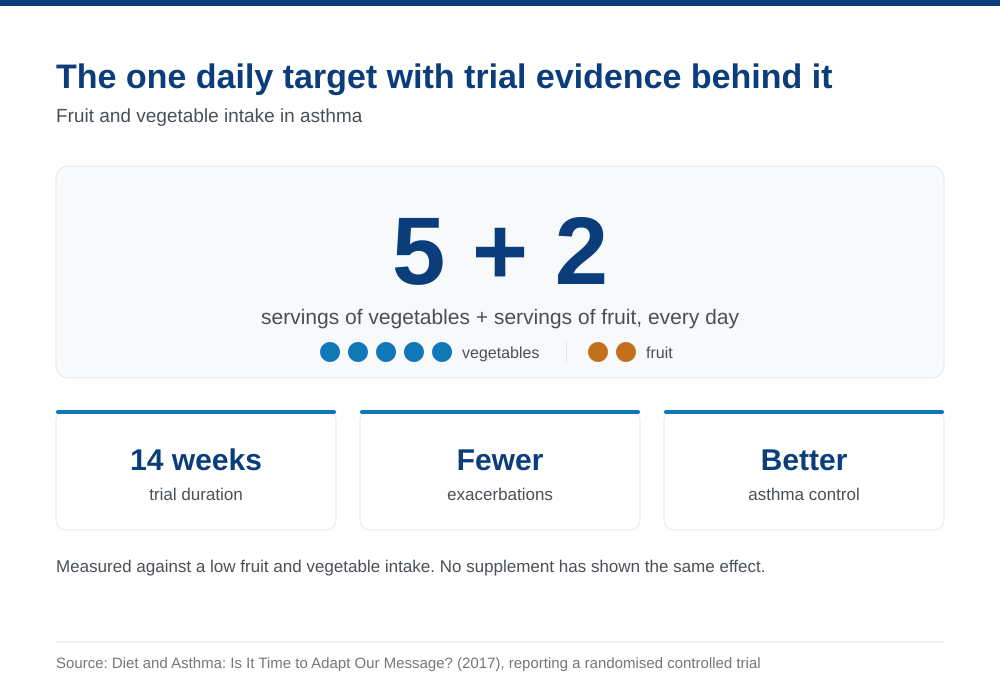
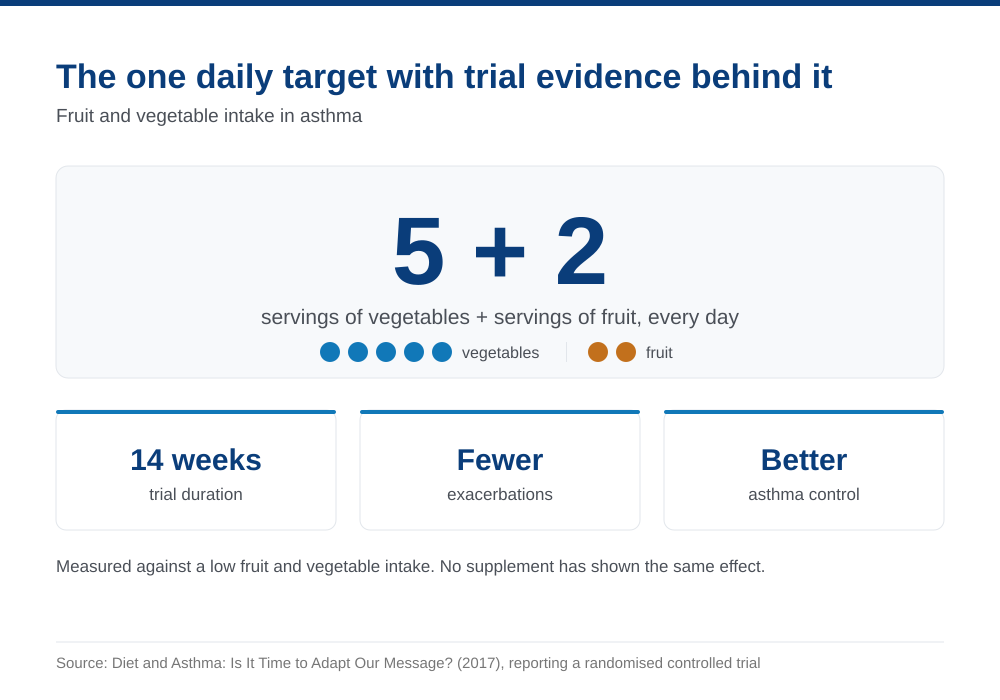
This is the one dietary change with a controlled trial behind it rather than only observational data. A review published in Current Allergy and Asthma Reports describes a randomised trial in which a high fruit and vegetable intake — at least five servings of vegetables and two servings of fruit daily for 14 weeks — was associated with fewer exacerbations and better asthma control than a low-intake diet.
A systematic review and meta-analysis of 58 studies on fruit and vegetable consumption found that 30 reported beneficial associations with asthma risk or respiratory function, and concluded that fruit and vegetable consumption appears to be protective against asthma.
Five and two a day is a specific, testable target. It is also the only number in this article I would ask a patient to act on.
The Mediterranean pattern
An overview of systematic reviews published in Allergy (2016) found evidence of an inverse association between asthma or wheeze and dietary intake of vitamins C, E and D, fruit intake, and adherence to a Mediterranean diet. The authors were careful to note that, vitamin D aside, most of this evidence comes from cross-sectional studies — which show association, not cause.
An earlier systematic review and meta-analysis found adherence to a Mediterranean diet protective for persistent wheeze, and summarised the overall evidence as “weak but nonetheless supportive” for fruit, vegetables and a Mediterranean pattern. That phrase is a fair summary of this entire field, and it is more honest than anything you will read on a supplement website.
Body weight
Of everything in this article, weight has the clearest mechanism. Excess weight restricts chest wall movement, reduces lung volumes and contributes to systemic inflammation, and asthma is consistently harder to control in patients carrying it. For a patient who is overweight and poorly controlled, gradual weight reduction is likely to do more than any food on a superfood list.
What the evidence does not support
Vitamin and antioxidant supplements
This is where most asthma diet advice goes wrong. A review in The Lancet Respiratory Medicine examined vitamins A, C, D and E alongside folate, vitamin B12 and choline, and concluded that at present there is insufficient evidence to recommend supplementation with any vitamin or nutrient acting as a methyl donor to prevent or treat asthma.
Nutrients consumed in food, within a varied diet, show benefit. The same nutrients bought as capsules do not reproduce it. That distinction is the single most commonly ignored finding in this entire subject.
Single “superfoods”
Ginger, turmeric, honey and garlic appear on almost every asthma diet list. None has trial evidence showing it improves asthma control. They are reasonable foods within a varied diet and there is no reason to avoid them — but buying them specifically to treat asthma is spending money on the wrong thing.
Foods that trigger symptoms in some people
Separate from the question of overall diet quality, a minority of patients have specific food triggers. These are real, and they are individual.
Sulphites
Sulphites are preservatives used in dried fruit, wine, pickled foods, some fruit juices and certain packaged items. The American Lung Association notes that sulphites can cause an adverse reaction or worsen asthma symptoms in some people. On labels they appear as sodium metabisulphite, potassium bisulphite and similar names. If symptoms reliably follow dried apricots or a glass of red wine, that is worth recording and raising at your appointment.
Food allergy is not the same as food intolerance
These get used interchangeably online and they are not the same thing. A true food allergy is an immune reaction that can be rapid and severe, and in a patient who also has asthma it carries a higher risk of a serious reaction. An intolerance causes discomfort rather than an immune response. The first needs formal allergy assessment and an action plan; the second does not. Guessing which one you have, and cutting out whole food groups on that guess, is how patients end up with a narrow diet and no improvement.
Foods that cause bloating
The American Lung Association also lists foods that cause gas or bloating — beans, carbonated drinks, onions, garlic and fried foods — as worth limiting, because abdominal distension pushes up against the diaphragm and can make breathing feel harder. This is mechanical rather than inflammatory, and it varies a great deal between individuals.
Two things that matter specifically in the UAE
Vitamin D status
Vitamin D is the one nutrient where the asthma evidence is rated more strongly, and it happens to be the nutrient most UAE residents are short of. A 2025 systematic review of vitamin D status in the UAE reports that despite an average of ten hours of sunlight a day, deficiency remains widespread — citing a large Dubai study of 7,924 patients in which 85.4% were vitamin D deficient.
That is a striking number in a country with this much sun, and the explanations are straightforward: time spent indoors, clothing, and limited dietary sources.
What it does not mean is that every asthma patient should start taking a supplement. The evidence supports having an adequate vitamin D status, not blanket supplementation. The sensible step is a blood test, and a decision made on the result rather than on assumption.
Fasting during Ramadan
No asthma diet article written for a Western audience covers this, and for patients here it is the most practically important dietary question of the year. In 2025 the European Respiratory Journal Open Research published a systematic review and consensus recommendations on Ramadan fasting for patients with chronic respiratory disease, producing 19 recommendations.
The reassuring finding first: the evidence suggests no significant adverse health outcomes from Ramadan fasting in patients with stable asthma. A separate study of 120 patients with moderate to severe asthma found no significant effect of fasting on asthma severity or spirometry results.
The problem is not the fasting. It is what happens to the inhaler.
Plan the inhaler schedule before Ramadan begins
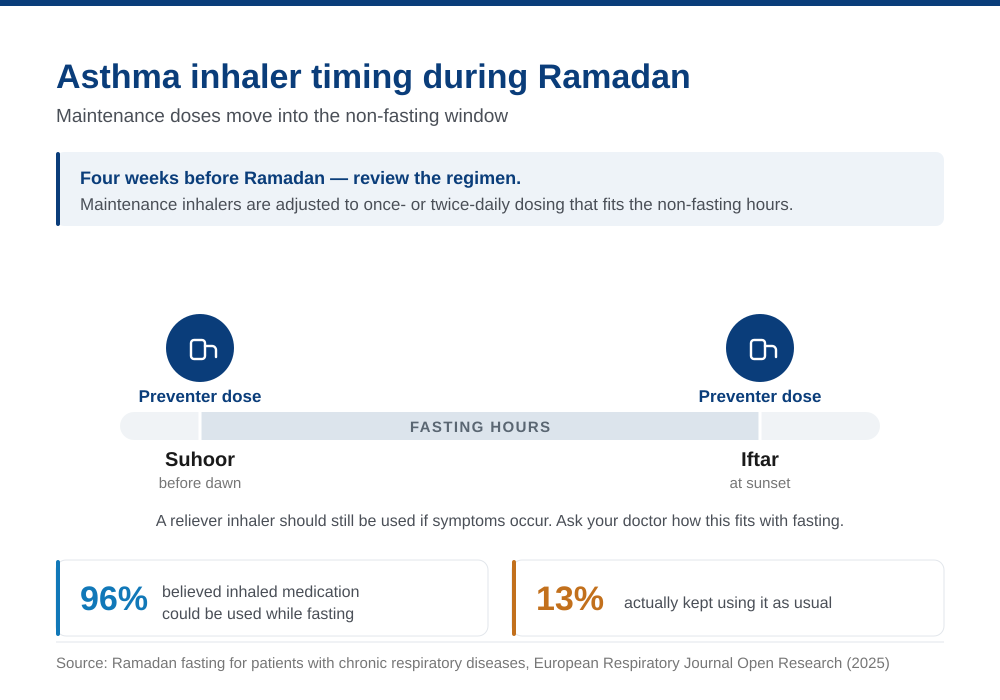
The consensus recommends that adjustments to maintenance inhaler regimens — moving to fasting-compatible once or twice daily dosing — should ideally be made at least four weeks before Ramadan, not during it. It also recommends scheduling inhaler use between iftar and suhoor.
The gap this closes is a real one. In one study of asthma patients during Ramadan, 96% believed inhaled medication could be used while fasting, but only 13% continued using it in their usual manner. Preventer inhalers work by controlling inflammation continuously; skipping them for a month is how a stable patient arrives in clinic in week three with an exacerbation. If you are unsure whether your technique is costing you doses, how to use an inhaler correctly covers it.
When fasting needs a conversation first
The consensus is built around pre-Ramadan consultation and individualised risk assessment rather than a blanket yes or no. Patients whose asthma is currently uncontrolled, who have had a recent exacerbation, or who are on oral steroids should have that assessment before deciding. Stable, well-controlled asthma is a different situation from asthma that has flared in the past month.
What this looks like on a plate
| Do this | Rather than this |
|---|---|
| Five servings of vegetables and two of fruit, daily, across varied colours | Buying a turmeric or ginger supplement |
| A Mediterranean-style pattern — vegetables, legumes, whole grains, fish, olive oil | A restrictive elimination diet started without assessment |
| Checking labels for sulphites if symptoms reliably follow certain foods | Cutting out dairy or wheat on the assumption they are a trigger |
| A vitamin D blood test, then a decision based on the result | Starting a supplement because the internet suggested it |
| Gradual weight reduction if you are overweight and poorly controlled | Expecting any single food to change your inhaler requirement |
What diet cannot do
Can diet replace asthma medication?
No. No food, supplement or eating pattern treats airway inflammation the way an inhaled corticosteroid does. Dietary changes are a supporting measure that may improve control and reduce flare-ups alongside prescribed treatment. Stopping or reducing a preventer inhaler without medical advice risks a severe attack.
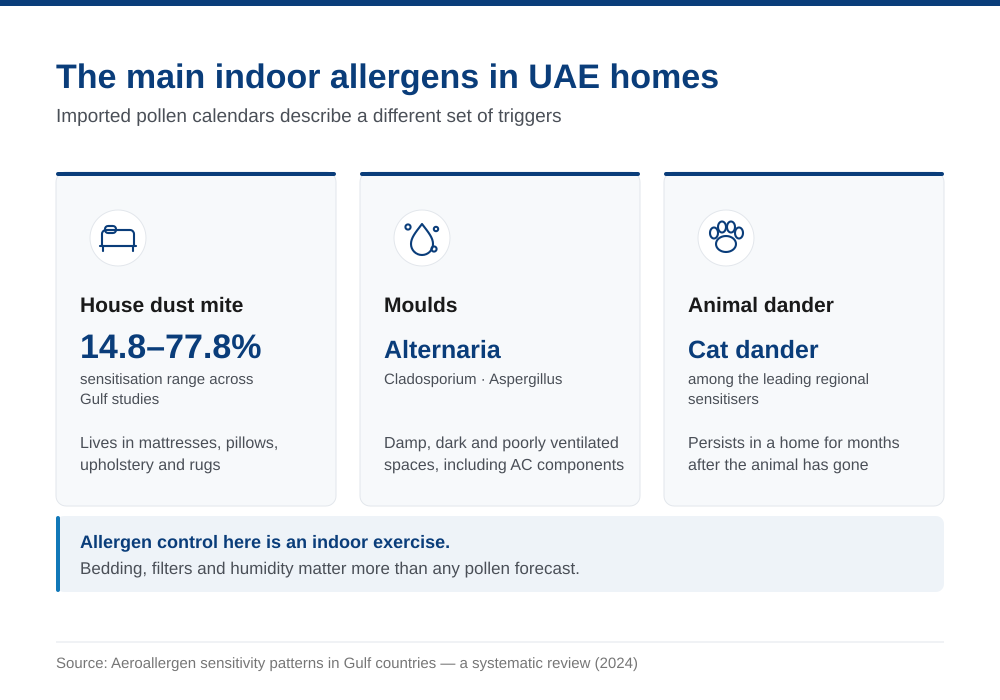
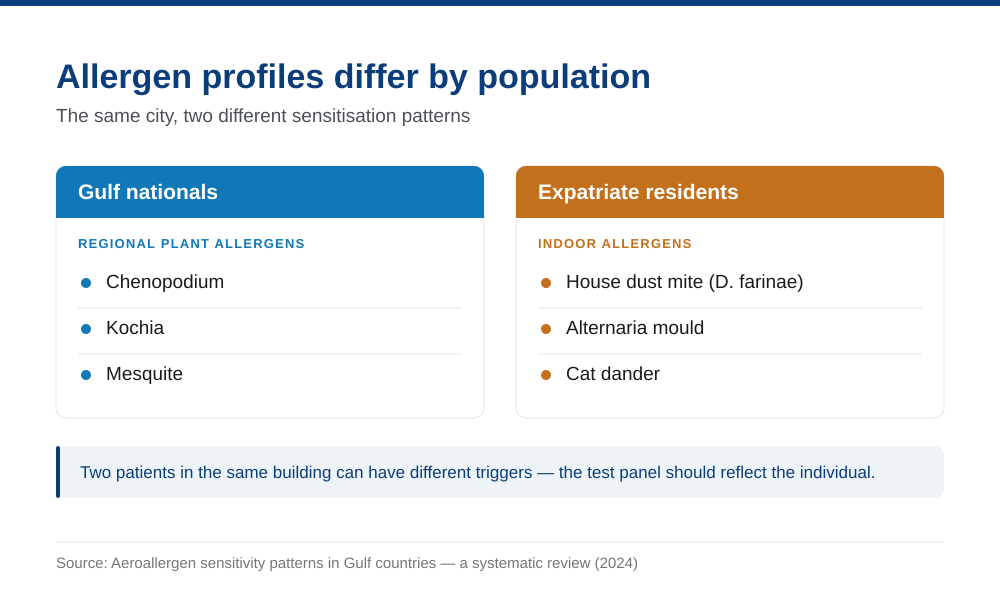
Diet also does nothing about the inhaled triggers that drive most asthma in this region. If symptoms are persistent, the more productive question is usually what you are breathing rather than what you are eating — allergic asthma triggers in the UAE covers the dust mite, mould and dander picture that applies to most patients here.
When to seek medical advice
Arrange a review if any of these apply:
- You are using a reliever inhaler more than twice a week
- Symptoms wake you at night
- A specific food reliably brings on wheeze, cough or chest tightness
- You are planning to fast and your asthma has flared in the past month
- You are considering cutting out a major food group
Seek emergency care the same day for breathlessness at rest, difficulty finishing a sentence, a reliever inhaler that is not working, or lips and fingertips turning blue or grey.
Key takeaways
- Diet has a modest, real effect on asthma — through overall patterns, not individual foods
- Five servings of vegetables and two of fruit daily is the one target with trial evidence behind it
- Supplements do not reproduce the benefit that the same nutrients show in food
- Sulphite sensitivity is real but affects a minority; allergy and intolerance are different things
- In the UAE, vitamin D status and Ramadan inhaler timing matter more than any superfood list
- Nothing on this page replaces a preventer inhaler
Planning to fast, or unsure whether your asthma is well enough controlled? Book a consultation with Prof. Dr. Syed Arshad Husain at Al Zahra Hospital, Sheikh Zayed Road, Dubai — call +971 54 384 4156.
Read more about asthma diagnosis and treatment in Dubai.
his article is for general information and does not replace a personal medical consultation. Do not change or stop prescribed asthma treatment without advice from your doctor.