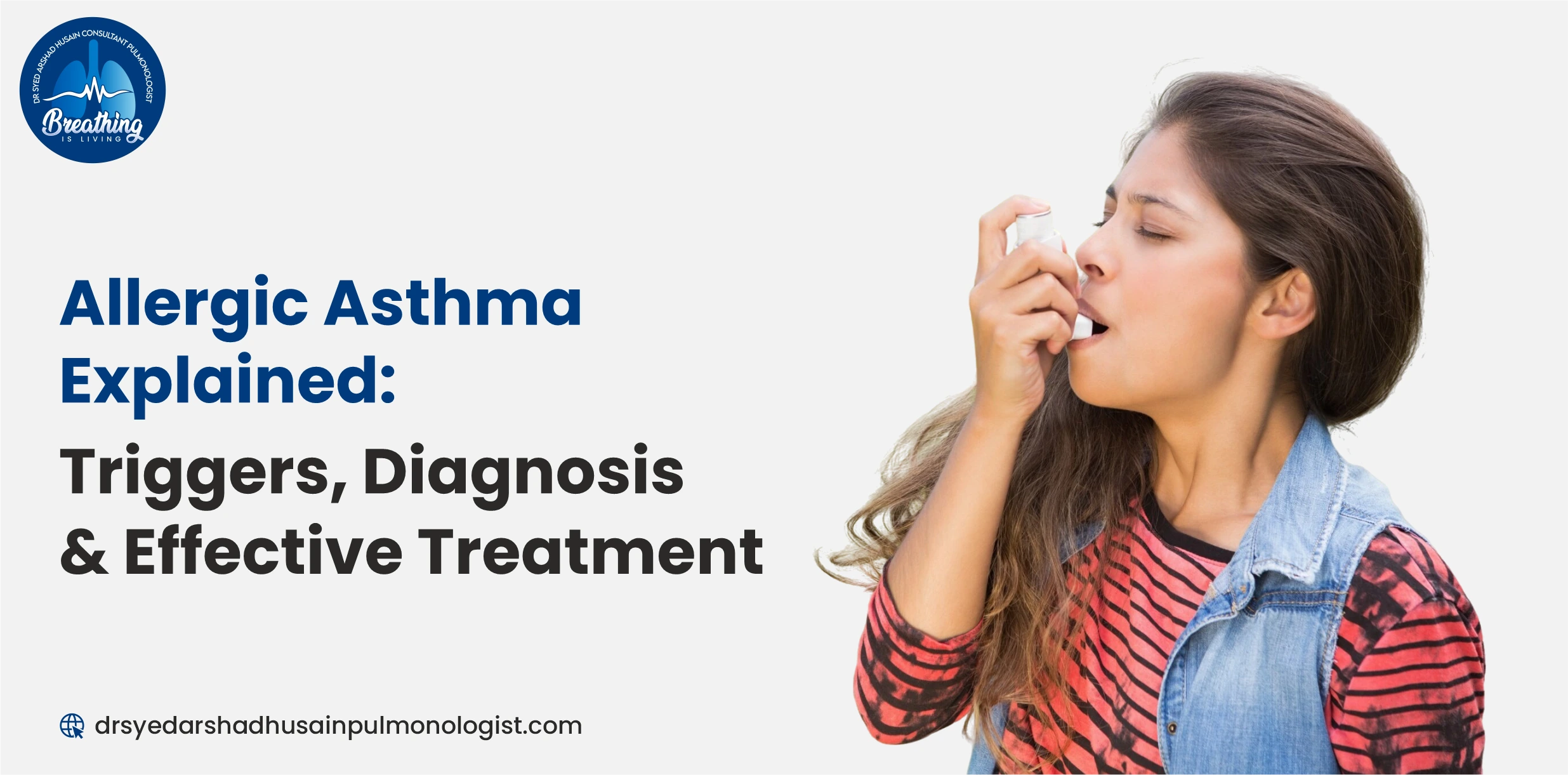
Allergic asthma is a common but often misunderstood condition that can affect breathing and daily life. Many people mistake its symptoms for seasonal changes or dust exposure. Understanding the triggers and getting the right treatment can help keep lungs healthy and symptoms under control.
Many people underestimate how allergies can cause breathing issues. Patients often think their cough, wheezing, or tightness in the chest happens because of dust, air conditioning, or weather changes. But these are sometimes signs of allergic asthma. This condition needs quick care to avoid future breathing problems.
Allergic asthma is something many people experience. It can be controlled, but is often not understood. Let us see what it means and the best treatment for allergic asthma.
What Is Allergic Asthma?
Allergic asthma happens when allergens, not just exercise or infections, kickstart the symptoms. A sensitive airway reacts to allergens by swelling up and narrowing, which makes it hard to breathe.
This type of asthma is different from just getting short of breath here and there. Allergic asthma symptoms appear after coming across specific triggers and may calm down when those triggers are avoided. If not taken care of over time, the swelling in the airways might stick around.
What Can Set Off Allergic Asthma
To control allergic asthma, it’s key to pinpoint what sets it off. In the UAE, indoor conditions and the environment often play a major role.
Some common allergic asthma symptoms include:
- Fine sand particles and dust storms
- Long-term use of air conditioning
- Indoor triggers like dust mites and mold
- Seasonal allergens like pollen
- Pet fur or fragrances with strong smells
Doctors find it crucial to address this when patients feel their symptoms get worse indoors compared to the outside. This could point to indoor allergic triggers.
Recognising Allergic Asthma Symptoms
Spotting allergic asthma symptoms helps to step in before it starts affecting everyday activities. These signs often appear on and off, so people might ignore them at times.
Common allergic asthma symptoms include:
- Experiencing wheezing when exposed to allergens
- Struggling with shortness of breath
- Feeling tightness in the chest
- Having a cough that sticks around, worse at night or in the morning
Many people with allergic asthma symptoms adjust their habits by avoiding activities that make them breathe harder. They may not realise their lungs need proper medical attention.
Understanding Long-Term and Chronic Allergic Asthma
When allergic asthma is left unchecked for a long period, it can develop into chronic allergic asthma. This happens when airway inflammation continues even when there are no flare-ups.
Those with chronic allergic asthma may notice their symptoms happen more often, struggle more with physical activities, and use medications more. Often, this advanced stage occurs because people ignored or shrugged off the earlier signs.
Treating allergic asthma early helps stop it from turning into a long-term problem. This is why it is important to get checked by a specialist.
Diagnosing Allergic Asthma
Doctors start by reviewing your health history. They look at when symptoms show up, what sets them off, and how well treatments work.
Tests for lung function help check if the airways are narrowed. Allergy tests might reveal what causes the reactions. Doctors don’t rely on just one test. They use a mix of results and their medical judgment to figure it out.
Getting the right diagnosis helps focus treatment better, so people don’t have to guess which method works.
Choosing the Best Treatment for Allergic Asthma
Treatments depend on the individual, as what works is not the same for everybody. The goal is to manage the condition over time, not just fix symptoms.
Important parts of the best treatment for allergic asthma are:
- Finding and avoiding triggers
- Keeping track of lung health often
- Changing treatment plans as needed
- Using the right allergic asthma medication
The aim is to make breathing steady, reduce sudden flare-ups, and enjoy an active lifestyle. Many patients notice big changes when they get the right treatment combination.
How Allergic Asthma Medication Helps Long-Term
Allergic asthma medication helps manage inflammation in the airways and stops symptoms from appearing. People take them even when they aren’t feeling many symptoms.
Patients often feel uneasy about using medications for a long time. This worry makes sense, but managed asthma can be dangerous too. Choosing the right allergic asthma medication helps reduce trips to the emergency room and supports better lung function.
Doctors create treatment plans suited to each person and check them.
Why Seeing a Specialist Helps
Managing asthma is more than giving out inhalers. It involves recognizing patterns, pinpointing triggers, and monitoring how treatments work.
Specialist advice plays a key role in this process. Dr. Syed Arshad Husain Pulmonologist takes a patient-centered approach to treating respiratory problems those linked to allergies or environmental causes.
Instead of just addressing symptoms one by one, he focuses on detailed diagnosis, patient education, and ongoing follow-ups over time. People looking to get the best treatment for allergic asthma often gain a lot from this thoughtful and tailored care method.
Managing Allergic Asthma in the UAE
Living with asthma in the UAE brings specific difficulties. Things like constant air conditioning, spending time indoors, and exposure to dust can have an impact on controlling symptoms.
Simple actions like keeping indoor air clean, avoiding triggers, drinking enough water, and visiting a doctor during flare-ups can make a big difference. Those with chronic allergic asthma find consistent check-ups more helpful than waiting for problems to arise.
Having a good treatment plan helps asthma patients keep working, traveling, and staying active.
Keeping Your Lungs Healthy for the Long Run
You can manage allergic asthma by catching it and staying consistent with care. Ignoring it lets inflammation continue, but taking action keeps your lungs working well.
If your breathing problems happen often or keep getting worse, checking things out again can be the key to feeling better and staying in control.
Conclusion
Allergic asthma can feel overwhelming, but it doesn’t have to take control of your life. The key is noticing the signs early and not brushing them off as just dust or a seasonal issue. When the condition is diagnosed on time and treated properly, most people are able to breathe easier, stay active, and avoid serious flare-ups. Small steps like understanding your triggers, using medication correctly, and keeping up with check-ups make a big difference in protecting your lungs for the long run.
If breathing problems are becoming a regular part of your day, it’s time to get them checked instead of living with the discomfort. Reach out to Dr. Syed Arshad Husain in the UAE for a thorough evaluation and a treatment plan designed around your needs.